Introduction
Choosing the wrong rope diameter creates immediate problems: jammed winches, slipping cleats, excessive weight aloft, or worse—line failure under load. Many boaters default to "bigger is better" without realising oversized rope reduces hardware compatibility and makes handling difficult, while undersized rope can fail catastrophically.
Rope diameter directly impacts strength, handling, hardware fit, and overall system safety in marine applications.
Selecting the correct diameter requires understanding boat size, application type, material properties, and hardware compatibility. This article provides:
- Sizing charts for halyards, sheets, and mooring lines
- Measurement system explanations (metric vs. imperial)
- Common diameter selection mistakes that compromise safety
- How diameter interacts with deck hardware and performance
Key Takeaways
- Rope diameter ranges from 1/4" (6mm) for small boat control lines to 3" (76mm) for large vessel mooring lines
- Selection depends on boat length, application type, material, and hardware compatibility
- Proper sizing delivers safe working loads with optimal handling and cleat compatibility
- High-performance fibers allow diameter reduction without sacrificing strength
- Undersized rope risks failure while oversized rope compromises handling
What Rope Diameter Represents in Marine Applications
Rope diameter is the measurement across the widest cross-section of the rope, typically measured in millimetres (metric) or fractional inches (imperial). This dimension determines three critical factors: breaking strength capacity, rope weight, and compatibility with deck hardware like blocks, clutches, and cleats.
Diameter functions as both a design parameter selected during rigging specification and a limiting factor that must fit through existing hardware on your vessel.
A 12mm line won't pass through a clutch rated for 6-12mm maximum, regardless of its superior strength characteristics. Understanding how diameter relates to strength helps you select rope that balances performance with hardware compatibility.
Key differences between diameter and strength:
- Larger diameter generally means higher strength, but material type affects this relationship significantly
- A 10mm Dyneema-cored rope can match or exceed the strength of a 12mm polyester rope
- High-performance materials deliver equivalent strength at smaller diameters, reducing weight and windage aloft
Factors That Influence Optimal Diameter Selection
Real-world diameter selection balances multiple competing factors beyond simple strength calculations:
Boat size and displacement: Larger, heavier vessels require larger diameter rope to handle greater loads. A 50-foot cruiser generates substantially more halyard tension than a 25-foot daysailer.
Application type: Halyards (raising sails) need different diameter than sheets (controlling sails) or mooring lines (securing vessel to dock). Each application experiences distinct loading patterns and handling requirements.
Rope material and construction: High-performance fibers like Dyneema allow 2mm smaller diameter while maintaining equivalent strength compared to polyester, enabling weight savings without compromising safety margins.
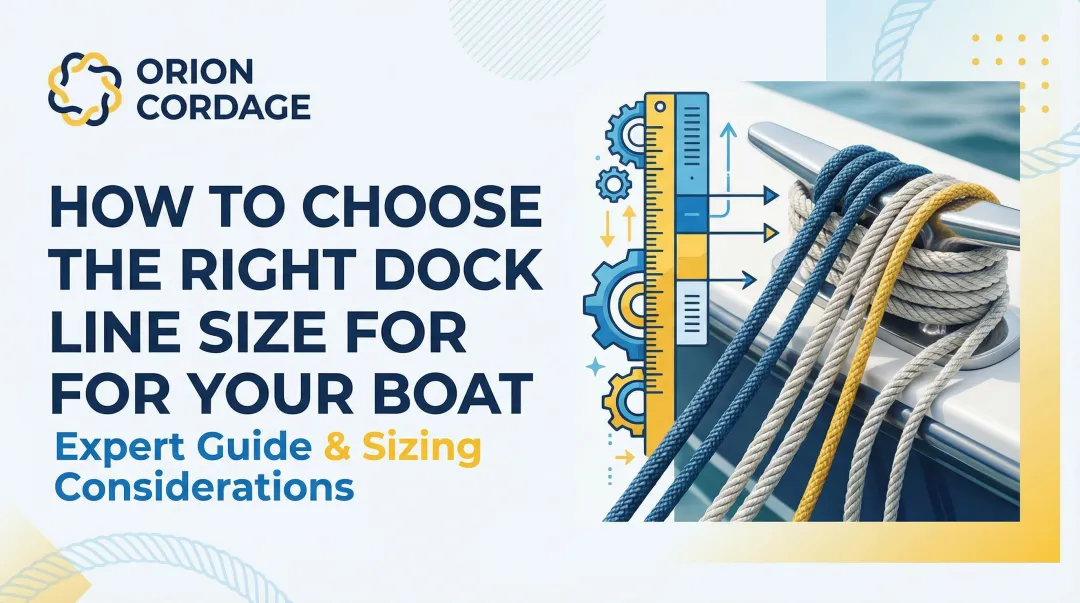
Hardware compatibility: Blocks, clutches, and cleats have maximum and minimum diameter ratings. Using rope outside these ranges causes faster wear, reduced efficiency, and potential system failure.
Crew handling needs: Lines must be comfortable to grip and manipulate, especially under load. Lines below 8mm (5/16") become difficult to handle and can cause hand fatigue or rope burn during high-load situations.
Rope Diameter Sizing Chart for Marine Applications
These industry-standard recommendations apply to cruising vessels under normal conditions.
Racing applications may use smaller diameters with high-performance materials, while offshore cruising may require sizing up for additional safety margin.
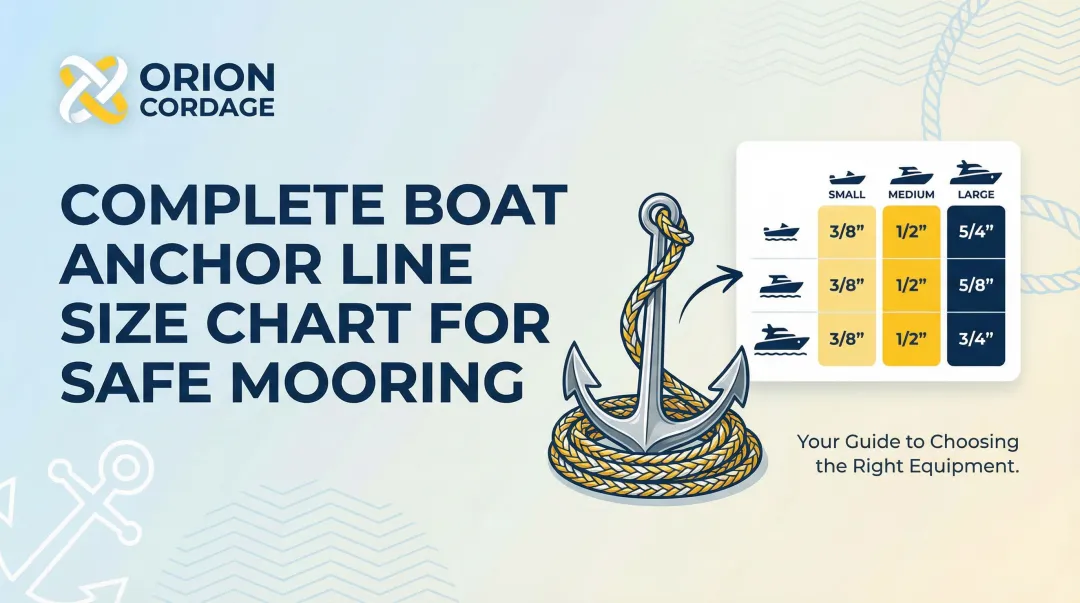
Mooring Line Diameter by Boat Length
Mooring lines require larger diameter than running rigging for several reasons:
- Absorb shock loads during docking and tidal movement
- Resist chafe from docks and pilings
- Provide comfortable grip during docking maneuvers
| Boat Length | Recommended Diameter (Polyester/Nylon) |
|---|---|
| 20-26 ft (6-8m) | 10mm (3/8") |
| 26-33 ft (8-10m) | 12mm (1/2") |
| 33-40 ft (10-12m) | 14mm (9/16") |
| 40-46 ft (12-14m) | 16mm (5/8") |
| 46-53 ft (14-16m) | 18mm (3/4") |
Adjustment factors:
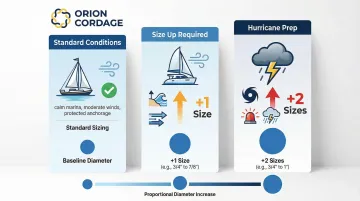
- Vessels with higher windage (catamarans, powerboats with tall superstructures) should size up one diameter increment
- High-current areas or exposed anchorages require larger diameter for shock absorption
- Hurricane preparation demands lines at least as long as the boat and one size larger than standard recommendations
Halyard Diameter by Boat Length
Halyards work under different conditions than sheets:
- Remain under static load once sail is raised (can use 1-2mm smaller than sheets)
- High-performance fiber options (Dyneema core) allow further diameter reduction
- Maintain low stretch while reducing weight aloft
| Boat Length | Main Halyard | Jib/Genoa Halyard | Spinnaker Halyard |
|---|---|---|---|
| 20-26 ft | 8mm | 8mm | 8mm |
| 30 ft | 10mm | 10mm | 8mm |
| 33-36 ft | 10-12mm | 10mm | 10-12mm |
| 40 ft | 12mm | 12mm | 12mm |
| 46 ft | 12mm | 12mm | 12mm |
| 53 ft | 14mm | 12mm | 14mm |
When upgrading to Dyneema-cored ropes, you can typically reduce diameter by one size (using 10mm instead of 12mm) due to higher breaking loads while maintaining proper hardware fit.
Sheet Diameter by Boat Length
Sheet sizing prioritizes handling comfort:
- Frequently handled under load during sail trimming
- Comfortable grip diameter prevents hand fatigue
- Undersizing creates safety risks in heavy weather
| Boat Length | Mainsheet | Jib Sheet | Spinnaker Sheet |
|---|---|---|---|
| 20-26 ft | 10mm | 10mm | 10mm |
| 30 ft | 10mm | 12mm | 10mm |
| 33-36 ft | 12mm | 12mm | 12mm |
| 40 ft | 12mm | 14mm | 12mm |
| 46 ft | 14mm | 14mm | 14mm |
| 53 ft | 14mm | 14mm | 14mm |
Racing applications may use smaller diameter with high-performance materials to reduce weight and windage, while cruising prioritizes comfortable handling and durability.
Key Technical Properties of Rope Diameter
Diameter determines multiple performance characteristics that directly affect your vessel's rigging system.
Diameter and Strength Relationship
Breaking strength increases roughly with the square of diameter—doubling diameter nearly quadruples strength for the same material and construction. A 12mm polyester rope breaks at 10,494 lbs (4,760 kg), while a 16mm polyester rope breaks at 15,939 lbs (7,230 kg).
Working load (safe working load) is typically calculated as breaking strength divided by a safety factor. Running rigging demands a 5:1 safety factor minimum (20% of breaking strength).
Mooring lines require higher margins to accommodate shock loads from wind gusts and wave action.
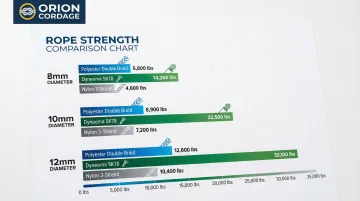
Material comparison at common diameters:
| Diameter | Polyester Double Braid | Dyneema (HMPE) SK78 | Nylon 3-Strand |
|---|---|---|---|
| 8mm (5/16") | 5,643 lbs (2,560 kg) | 7,694 lbs (3,490 kg) | 3,000 lbs (1,361 kg) |
| 10mm (3/8") | 8,135 lbs (3,690 kg) | 11,816 lbs (5,360 kg) | 4,250 lbs (1,928 kg) |
| 12mm (1/2") | 10,494 lbs (4,760 kg) | 15,300 lbs (6,940 kg) | Diameter directly affects rope weight per meter, which is critical for halyards and control lines that add weight aloft. Weight aloft impacts boat stability and performance significantly. |
Weight comparison for polyester double braid:
- 10mm diameter: 7.47 kg per 100 meters
- 12mm diameter: 11.1 kg per 100 meters
- Weight increase: 49% for just 2mm additional diameter
The balance between adequate diameter for strength and minimal diameter for weight savings becomes particularly important on performance cruisers and racing vessels where every kilogram aloft affects pointing ability and stability.
Diameter and Hardware Compatibility
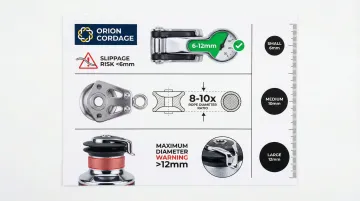
Blocks, clutches, sheaves, and cleats all have specified diameter ranges they're designed to accommodate. Using rope outside these ranges causes accelerated wear, reduced efficiency, and potential system failure.
Critical compatibility requirements:
- Clutches: Manufacturers rate rope clutches for specific ranges (e.g., 6mm-12mm). Using smaller diameter HMPE lines that fall within the theoretical range but have slick covers can result in slippage under load
- Sheaves: Recommended sheave diameter is typically 8-10 times the rope diameter. For specialized high-modulus materials like Aramids, this ratio may need to increase to 20 times to prevent fiber fatigue
- Winches: Manufacturers explicitly warn not to exceed maximum line size specifications to prevent damage to self-tailing mechanisms
How Rope Diameter is Specified, Measured, and Validated
Diameter can be specified in multiple measurement systems and must be accurately measured for proper selection and replacement.
Measurement Systems and Conversion
Marine rope diameter is specified in millimeters (metric standard used by most manufacturers) or fractional inches (traditional US system). Common conversions include:
- 6mm ≈ 1/4"
- 8mm ≈ 5/16"
- 10mm ≈ 3/8"
- 12mm ≈ 1/2"
- 14mm ≈ 9/16"
- 16mm ≈ 5/8"
- 18mm ≈ 3/4"
These are approximations—actual sizes may vary slightly between manufacturers. Orion Cordage provides precise diameter specifications in both measurement systems for accurate selection.
Field Measurement Methods
Proper diameter measurement requires specific technique to ensure accuracy.
Perform measurements with constant, even tension (approximately 10 lbs) applied to the rope. Measurements on untensioned rope are unreliable and inconsistent.
Accurate Measurement Steps:
- Use calipers placed perpendicular to the rope's length at its widest point
- Apply approximately 10 lbs of tension to compress fibers consistently
- Take measurements at 3-4 locations along the rope and average them
- Ensure the rope is not under operational load, which compresses diameter further
These measurement techniques account for normal diameter variations. Rope diameter can decrease slightly under load (compression) and may increase over time due to water absorption (particularly nylon), dirt accumulation, or construction relaxation.
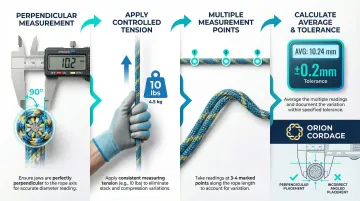
Manufacturer specifications typically include a tolerance of approximately ±0.2mm (±5%).
Implications of Selecting Incorrect Rope Diameter
Diameter errors in either direction create specific problems in marine applications that compromise safety and performance.
Undersized Diameter Consequences
Insufficient diameter leads to inadequate strength margin, creating risk of rope failure under normal operating loads or shock loads during sudden wind gusts or wave action.
The consequences extend beyond simple strength calculations:
Safety risks:
- Breaking strength may fall below required safety factors (5:1 for running rigging, higher for mooring)
- Shock loads from wind gusts can exceed working load limits
- Gradual degradation from UV exposure and chafe reduces strength faster on smaller diameter ropes
Handling difficulties:
- Small diameter rope is difficult to grip and can cause hand fatigue during extended sail trimming
- Rope burn becomes a serious risk during high-load situations like reefing in heavy weather
- Crew may be unable to hold or surge the line manually in emergency situations
Hardware incompatibility:
- Undersized rope may slip in clutches or cleats not designed for smaller diameters. Low-stretch HMPE materials with slick covers are particularly prone to slippage
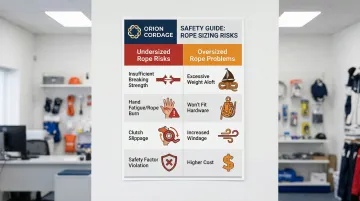
Oversized Diameter Consequences
Excessive diameter adds unnecessary weight, particularly problematic for halyards where weight aloft negatively affects boat stability and performance.
Every kilogram added above the deck reduces righting moment and increases pitching motion.
Performance impacts:
- Unnecessary weight aloft raises the center of gravity, reducing stability
- Increased windage from larger diameter lines affects pointing ability
- Heavier lines are more difficult to handle and require more effort to trim
Hardware compatibility issues:
- Oversized rope won't fit through blocks, clutches, or fairleads designed for smaller diameters
- Lines may jam in cleats when diameter exceeds cleat horn spacing
- Undersized sheaves cause accelerated wear and reduce rope service life—sheaves should be 8-10 times rope diameter
Economic factors:
- Increased cost for unnecessarily large diameter rope
- Greater storage space requirements both on board and for spare line inventory
- More frequent replacement due to handling difficulties and improper hardware fit
Common Rope Diameter Selection Mistakes in Marine Applications
Even experienced mariners make sizing errors that compromise safety or performance. The most common mistakes include:
Using a Single Diameter for All Applications
Treating halyards, sheets, and mooring lines as interchangeable leads to suboptimal performance. Each application has distinct requirements:
- Halyards benefit from lighter weight aloft
- Sheets need comfortable handling diameter for frequent adjustments
- Mooring lines require chafe resistance and shock absorption capacity
Selecting Based Solely on Breaking Strength
Matching diameter to breaking strength tables without safety factors creates dangerous situations. Working load safety factors should be 5:1 minimum for running rigging and 10:1 for mooring lines. This accounts for shock loads and degradation over time.
Ignoring Hardware Specifications
Choosing rope diameter that exceeds equipment ratings for blocks, clutches, or cleats leads to installation failures. Check your hardware specifications first—they represent absolute boundaries.
Failing to Account for Material Differences
Replacing polyester with high-performance fiber at the same diameter wastes the strength advantage. A direct swap ignores the opportunity to reduce diameter and weight while maintaining or increasing strength.
Downsizing Too Aggressively
While Dyneema and similar materials allow diameter reduction, going below 8mm (5/16") for sheets and halyards on cruising vessels creates handling problems. The rope becomes difficult to grip and control manually, offsetting performance gains.
Conclusion
Rope diameter is a governing specification in marine rigging that determines strength capacity, handling characteristics, hardware compatibility, and overall system reliability.
Unlike many marine equipment decisions where "close enough" works, diameter selection requires precision—undersized rope creates unacceptable safety risks, while oversized rope compromises performance and hardware compatibility.
Proper diameter selection requires balancing boat size, application requirements, material properties, and existing hardware constraints.
The sizing charts in this guide offer industry-standard starting points. However, your specific vessel's rigging configuration, hardware specifications, and operating conditions may require adjustments.
Manufacturers like Orion Cordage, manufacturing rope and cordage since 1856 with facilities in the USA and Canada, provide diameter specifications and technical guidance for demanding marine environments.
When in doubt, consult with rigging professionals who can evaluate your specific vessel and recommend appropriate diameter ranges that balance safety, performance, and handling characteristics.
Frequently Asked Questions
How to determine rope diameter?
Measure rope diameter using calipers placed perpendicular to the rope's length at its widest point. Take measurements at 3-4 locations and average them for accuracy.
How thick is 8mm rope?
8mm rope is approximately 5/16" in diameter, slightly larger than 1/4" (6mm) and smaller than 3/8" (10mm). It's commonly used for small boat control lines, flag halyards, and light-duty applications on vessels under 25 feet.
What happens if I use rope diameter smaller than recommended for my boat size?
Undersized rope creates safety risks due to insufficient strength for expected loads, especially for halyards and mooring lines. It's also difficult to grip, may slip in rope clutches, and lacks adequate safety margin for shock loads.
Can I replace my current rope with a smaller diameter if I use high-performance material?
High-performance fibers like Dyneema typically allow 1-2mm diameter reduction while maintaining equivalent strength. Verify the smaller diameter meets hardware specifications and provides adequate grip for comfortable handling.
Why do mooring lines use larger diameter than halyards on the same boat?
Mooring lines endure shock loads, sustained tension, and chafe against docks, requiring larger diameter for durability and handling comfort. Halyards experience mostly static load once raised and benefit from lighter weight aloft.
How does rope diameter affect which blocks and clutches I can use?
All deck hardware has specified minimum and maximum rope diameter ranges based on sheave size, clutch cam design, and cleat horn spacing. Using rope below minimum diameter causes slippage and poor holding, while exceeding maximum diameter causes jamming, accelerated wear, and potential hardware failure. Always verify rope diameter falls within hardware specifications before installation.