Key Takeaways
- Use nylon rope sized at 1/8" diameter per 9 feet of boat length (3/8" minimum)
- Bow/stern lines should be 2/3 of boat length; spring lines equal to boat length
- Minimum 4 lines required (1 bow, 1 stern, 2 spring); 6 lines provide ideal redundancy
- Choose 3-strand, braided, or double-braided nylon for different handling and durability needs
What is a Dock Line?
Dock lines (also called mooring lines) are specialized ropes designed to secure a boat to a dock, pier, or mooring while handling movement from wind, waves, and wakes.
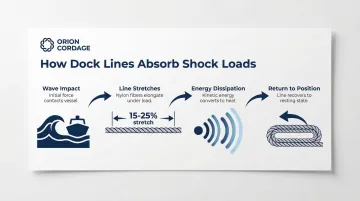
Unlike anchor lines that prioritize raw tensile strength, dock lines require controlled stretch to absorb shock loads without transferring destructive forces to cleats or hull hardware.
Proper dock lines act as shock absorbers, protecting both boat and dock from damage. Key properties include:
- Controlled stretch: New nylon cordage stretches up to 25% before failure
- Shock absorption: Dissipates kinetic energy from waves and wakes
- Load distribution: Prevents concentrated stress on cleats and hull hardware
Core Components of Dock Lines
Understanding dock line construction helps boaters select lines that balance strength, handling comfort, and longevity. Three key factors determine performance: material composition, weave construction, and diameter.
Material Composition
Nylon is the only acceptable material for dock lines due to its unique stretch properties. This elasticity absorbs shock loads while allowing the rope to return to its original length, smoothing out surge effects from wakes and heavy seas.
Why not polypropylene? It degrades rapidly in sunlight, lacks adequate stretch (making it dangerous under shock loads), and has significantly lower breaking strength. It's unsuitable for permanent docking applications and should only be used for emergency towing.
Weave Construction Types
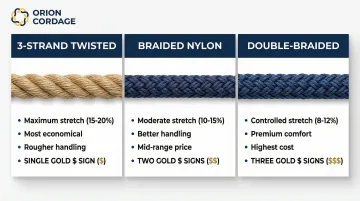
Three-strand twisted rope:
- Most abrasion-resistant option
- Offers maximum stretch (15-20%)
- Easiest to splice for custom loops
- Most economical choice
- Rougher on hands and stiffens over time
Braided nylon:
- Stronger than three-strand
- Softer and easier to handle
- Better appearance for luxury vessels
- Moderate stretch (10-15%)
- Mid-range price point
Double-braided nylon:
- Highest strength-to-weight ratio
- Superior abrasion resistance
- Controlled stretch (8-12%)
- Premium handling comfort
- Highest cost but longest lifespan
Line Diameter and Breaking Strength
Breaking strength increases exponentially with diameter. Understanding this relationship helps you select lines with adequate safety margins.
| Diameter | Double Braid Strength | 3-Strand Strength |
|---|---|---|
| 3/8" | ~4,900 lbs | ~3,600-4,250 lbs |
| 1/2" | ~8,000 lbs | ~7,500 lbs |
| 5/8" | ~13,100 lbs | ~11,650 lbs |
| 3/4" | ~22,200 lbs | ~17,150 lbs |
Working Load Limits (WLL) typically range from 10-20% of breaking strength for recreational use. This safety factor accounts for UV degradation, chafe, and unexpected shock loads.
Manufacturers like Orion Cordage produce dock lines tested to these specifications, ensuring consistent breaking strengths across their product range.
End Configurations
Once you've selected the right diameter and construction, consider how the line attaches to your boat and dock.
Spliced eye loops (typically 12" diameter) create permanent, strong attachment points for cleats without weakening the line. They're ideal for boats kept in permanent slips where distances remain consistent.
Lines without loops offer flexibility for transient docking situations where cleat distances vary. They allow you to adjust the working length by tying different knots.
Why Proper Dock Lines Matter
Undersized dock lines put your boat at serious risk. BoatUS reports that proper dock lines could have saved approximately 50% of boats damaged at fixed docks during hurricanes—specifically lines that were longer, larger, and better protected against chafing.
The right line diameter makes a tangible difference in several ways:
- Load distribution: Properly sized lines spread stress evenly across cleats, rails, and hull hardware
- Hardware protection: Undersized lines can wrench cleats out of the deck under heavy load, causing thousands in damage
- Long-term durability: Quality lines require less frequent replacement, reducing costs over time
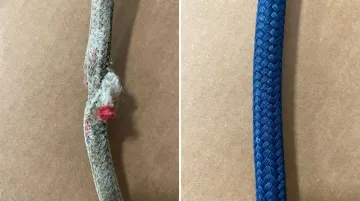
Even quality lines degrade over time. Testing found that 10-12 year old nylon lines lost up to 75% of their original tensile strength due to UV exposure and environmental factors. Lines may look serviceable while being dangerously weakened.
What to Consider When Choosing the Best Dock Lines
Six critical factors determine which dock lines will provide optimal security and longevity for your specific boat and docking conditions. These factors work together—optimizing one without considering others can still result in inadequate mooring security.
Boat Size and Weight
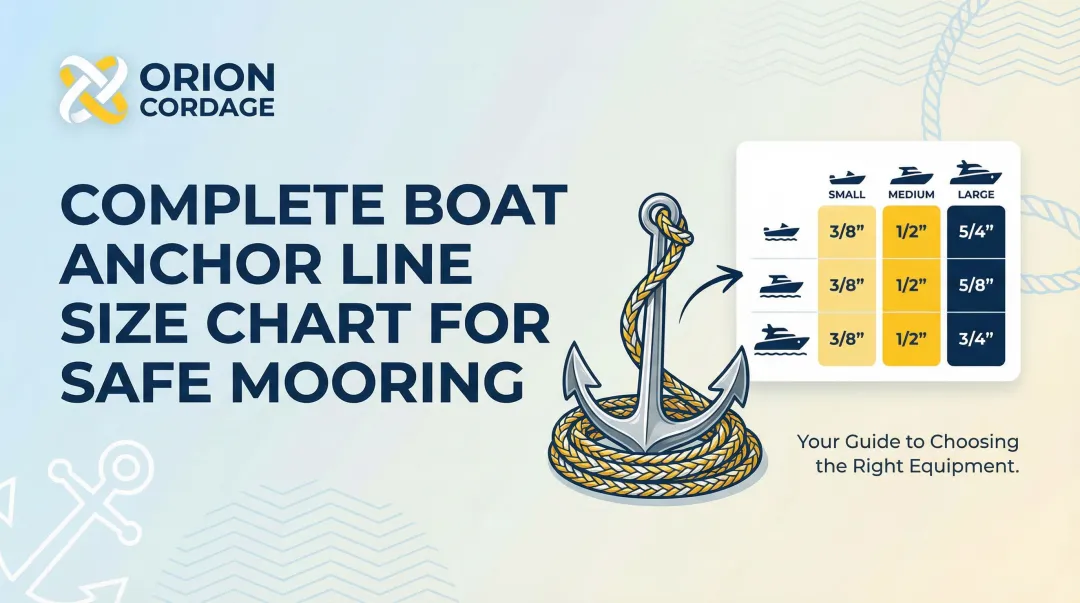
The standard sizing formula is 1/8" of diameter for every 9 feet of boat length, with 3/8" as the absolute minimum.
| Boat Length | Minimum Diameter | Optimal/Storm Diameter |
|---|---|---|
| Up to 20 ft | 3/8" | 1/2" |
| 20-27 ft | 3/8" | 1/2" |
| 28-31 ft | 7/16" | 5/8" |
| 32-36 ft | 1/2" | 5/8"-3/4" |
| 37-45 ft | 5/8" | 3/4"-7/8" |
| 46-54 ft | 3/4" | 7/8"-1" |
Heavier boats (displacement hulls, large cruisers) should size up one increment for additional load capacity. Larger diameter lines (5/8"-3/4") are also easier to grip and handle, making them popular even on boats that could technically use smaller sizes.
Line Length Requirements
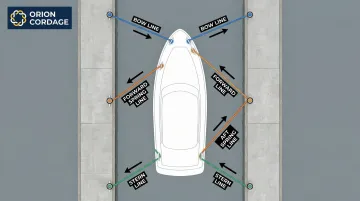
Bow and stern lines should be approximately 2/3 of the boat's overall length. This allows proper angle and adequate slack for tidal changes without creating dangerous tension.
Spring lines (forward and aft) should equal the boat's length to effectively prevent fore-aft movement. Testing shows spring lines can reduce peak loads on deck hardware by 20-50%.
Longer lines provide more shock absorption through increased stretch, particularly important in areas with significant boat wake or tidal fluctuations. Having extra length is better than too little—excess can be coiled, but short lines create dangerous tension.
Number of Lines Needed
Minimum setup: 4 lines total
- 1 bow line
- 1 stern line
- 2 spring lines (forward and aft)
Recommended setup: 6 lines total
- 2 bow lines
- 2 stern lines
- 2 spring lines
This redundancy ensures that if one line fails, others can maintain vessel security. Double up lines during storms, extended absences, or in high-wake areas.
Keep backup lines onboard for emergency situations or helping fellow boaters.
Docking Environment and Conditions
Your docking environment directly impacts which lines will perform best:
Saltwater vs. freshwater:
- Saltwater dries into sharp crystals that work into fibers like internal sandpaper, causing abrasion from the inside out
- Saltwater lines need frequent freshwater rinsing to prevent damage
Exposure level:
- Open slips with direct sun and weather need more UV-resistant materials than covered docks
- UV radiation attacks outer fibers, making them brittle and weak
Tidal range:
- Areas with major tidal changes (4+ feet) require longer lines with more stretch
- Prevents vertical movement from hanging or submerging the boat
Wake and traffic patterns:
- High-traffic marinas need stronger, more shock-absorbent lines than calm anchorages
- Constant wake-induced cycling fatigues rope fibers over time
Color and Visibility
Darker colors (navy, black) show dirt less but fade faster under UV exposure than lighter colors (white, gold). Lighter colors may require more frequent cleaning but maintain appearance longer and stay cooler to touch in direct sunlight.
Some boaters prefer color-coding lines (different colors for bow, stern, spring) for quick identification during docking. This reduces confusion during stressful docking situations, especially when short-handed.
Accessories and Protection
Chafe guards (leather, canvas, or plastic sleeves) protect lines at rub points like cleats, rails, and dock edges. In one documented case, a 40-foot sailboat nearly sank when its 3/4" nylon pennants chafed through during a 55 mph gale.
Dock line snubbers (rubber or spring-loaded devices) absorb additional shock loads during rough conditions, extending line life by reducing peak forces on the rope.
Line floats or dock wheels prevent lines from sinking and tangling with propellers or marine growth in areas with strong currents.
Proper cleat selection and installation is equally important—the strongest line is only as good as its attachment point. Undersized or poorly installed cleats fail under loads the line could easily handle.
How Orion Cordage Can Help
Choosing the right dock line size is easier when you work with a manufacturer that offers complete sizing options and materials guidance. Orion Cordage has manufactured marine rope and cordage solutions since 1856, giving boaters access to the full range of diameters and constructions covered in this guide.
Orion designs, manufactures, and tests thousands of SKUs at facilities in the USA and Canada. This domestic manufacturing expertise translates to dock lines engineered for saltwater environments—resisting UV degradation, salt crystal abrasion, and the constant cycling of wake-induced loads that affect line longevity.
When you've determined the right size for your boat, Orion makes it easy to source:
- Complete diameter range from 3/8" to 1" for vessels 15-60+ feet
- Multiple material options (nylon, polyester, polypropylene) matched to your docking conditions
- Readily available through marine distributors throughout North America
- Consistent availability with tight lead times
Conclusion
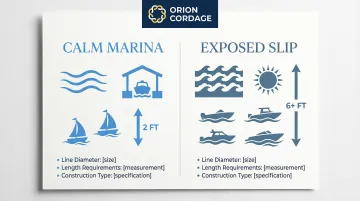
Selecting the right dock line isn't about finding the most expensive or popular option—it's about matching line specifications to your boat's size, weight, and docking environment. A 30-foot boat in a calm freshwater marina has vastly different requirements than a 45-foot cruiser in an exposed saltwater slip.
Proper dock lines are an investment in vessel protection. Quality lines can prevent thousands in damage from a single storm or docking incident, making them one of the most cost-effective pieces of safety equipment you'll buy.
That investment only pays off with proper maintenance. Inspect dock lines every few months for chafe, UV damage, or stiffness. Replace lines proactively rather than after they fail—the cost of new lines is negligible compared to the cost of a drifting boat.
When you're ready to upgrade your dock lines, manufacturers like Orion Cordage offer marine-grade cordage designed for the demanding conditions boats face daily. With the right lines properly maintained, you can dock with confidence in any weather.
Frequently Asked Questions
What size should my dock line be?
Use the formula 1/8" diameter per 9 feet of boat length. A 27-foot boat needs 3/8" line minimum, while a 36-foot boat requires 1/2" line. Sizing up one increment provides easier handling and additional safety margin, especially for heavier displacement hulls.
What size dock lines for a 45 foot boat?
A 45-foot boat requires 5/8" diameter dock lines at minimum. Many owners prefer 3/4" for superior handling comfort and additional load capacity, particularly for heavier hulls or high-wake marinas.
Should dock lines be tight or loose?
Dock lines should have moderate slack—tight enough to limit surge but loose enough to avoid shock loads on cleats. For tidal areas, allow enough slack to accommodate the full rise and fall without submerging or hanging the vessel.
How long do dock lines typically last?
Quality nylon dock lines last 2-5 years depending on UV exposure and maintenance. Lines in direct sunlight need replacement every 1-2 years, while covered slips extend life to 3-5 years.
Can I use the same dock lines in salt water and fresh water?
Yes, nylon dock lines work in both environments. Salt water lines require frequent fresh water rinsing to prevent crystal buildup that accelerates UV damage. Rinse after each use and dry completely before storage.
What's the difference between 3-strand and braided dock lines?
Three-strand offers maximum stretch (15-20%) and abrasion resistance at lower cost but is rougher on hands and can stiffen over time. Braided provides superior handling comfort, better appearance, and controlled stretch (8-15%) at a higher price point, making it popular for frequent docking situations.