Introduction
Choosing the right anchor line is a critical safety decision that can mean the difference between a secure night at anchor and a catastrophic dragging incident. Historical data from hurricane events shows that nylon anchor rodes are a common point of failure, with hundreds of boats driven ashore in a single Florida hurricane season because their anchor lines parted.
The two most popular options among recreational boaters are 3-strand twisted nylon and double braid (braid-on-braid) nylon, each offering distinct advantages.
Understanding the differences matters because your choice directly affects:
- Holding power and shock absorption
- Windlass compatibility and operation
- Handling ease and rope management
- Long-term durability and cost
The wrong anchor line can jam your windlass, transfer excessive shock loads to deck hardware, or fail when you need it most.
Key Takeaways
- 3-strand: Traditional twisted rope with 15-20% stretch, easy splicing, and lower cost
- Double braid: Braided core/cover with 25-35% higher strength and smooth handling
- Cost vs. strength: 3-strand runs 20-30% less; double braid offers better strength-to-diameter ratio
- Best for 3-strand: Cost savings, easy splicing, shock absorption, traditional windlasses
- Best for double braid: Maximum strength, smooth handling, compact locker storage
3-Strand vs Double Braid Anchor Line: Quick Comparison
Here's how these two anchor line types stack up across the factors that matter most to boaters.
Cost
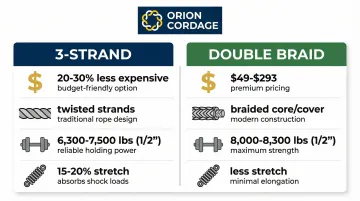
3-Strand: More affordable, typically 20-30% less expensive than double braid of the same diameter. Retail prices range from $21 to $569 (USD) depending on diameter and length.
Double Braid: Premium pricing due to more complex manufacturing process. Comparable sizes cost $49 to $293 (USD), with higher-end options exceeding $300.
Construction
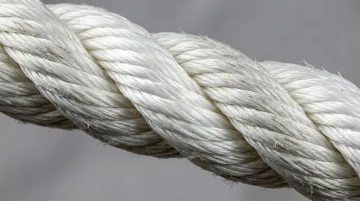
3-Strand: Three strands twisted together in a traditional laid rope pattern. The twist creates natural elasticity and allows individual strands to share loads.
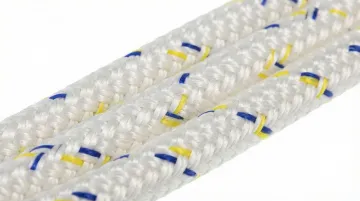
Double Braid: Braided core encased in a braided sheath (braid-on-braid construction). The dual-layer design distributes loads evenly across both core and cover.
Strength
3-Strand: Strong and reliable for most applications. A 1/2" diameter line breaks at approximately 6,300-7,500 lbs, while 5/8" breaks at 10,000-11,650 lbs.
Double Braid: 25-35% stronger than 3-strand of the same diameter. A 1/2" double braid breaks at 8,000-8,300 lbs, and 5/8" at 13,500-17,000 lbs—offering highest tensile strength.
Stretch & Shock Absorption
3-strand offers excellent elasticity with 15-20% stretch under load. At 30% load, it stretches 13%, providing superior shock absorption for dynamic loads from waves and wind.
Double braid has less stretch, providing more consistent length under load. This reduces shock absorption but offers more predictable rode behavior.
Handling & Ease of Use
3-Strand: Can stiffen over time, especially in saltwater. Prone to hockle (kinking) if twisted against the lay, which creates handling challenges and storage issues.
Double Braid: Soft, flexible, easy on hands. Torque-free design won't hockle. Falls smoothly into anchor locker and takes up less space due to more compact coiling.
What is 3-Strand Anchor Line?
3-strand anchor line is traditional twisted rope constructed by twisting three individual strands together in a helical pattern. This construction method has been the standard for marine anchoring for decades due to its proven reliability, ease of repair, and cost-effectiveness.
The core benefits of 3-strand include:
- Superior shock absorption: The twisted construction provides 15-20% stretch, acting as a built-in shock absorber
- Cost-effectiveness: Typically 20-30% less expensive than double braid of equivalent diameter
- Easy splicing: DIY repairs and customization are straightforward with basic marlinspike skills
- Strong chafe resistance: The twisted construction exposes fresh rope surface as outer fibers wear
This twisted construction creates natural elasticity that helps absorb dynamic loads from waves and wind. At 30% load, 3-strand nylon stretches 13%, reducing stress on both the anchor and boat hardware.
In choppy conditions where constant load cycling occurs, this elasticity prevents the anchor from breaking free or damaging deck fittings.
Breaking Strength by Diameter:
- 1/2" (12mm): 6,300-7,500 lbs
- 5/8" (16mm): 10,000-11,650 lbs
- 3/4" (18mm): 17,150 lbs
However, 3-strand has drawbacks:
- Stiffens over time, especially in saltwater environments where salt crystals get trapped in the fibers
- Can hockle (kink) if twisted in the wrong direction, creating weak points that compromise strength
- Takes up more anchor locker space than double braid due to loose coiling characteristics
Testing on 10-12 year old 3-strand dock lines revealed they retained only 25-51% of their original breaking strength, even when appearing visually intact.
Regular inspection and proactive replacement are critical for maintaining anchor system reliability.
Use Cases of 3-Strand Anchor Line
3-strand fits best in these scenarios:
- Recreational vessels in the 25-45 foot range benefit from adequate strength, excellent shock absorption, and affordability
- Many Lewmar and Maxwell windlasses are designed specifically for 3-strand or 8-plait rope (Muir windlasses explicitly warn that using the wrong rope type may cause jamming and excessive wear)
- Budget-conscious boaters get proven performance at the lowest price point when cost is a primary consideration
- Boaters who customize their anchor rodes, add thimbles, or make repairs appreciate the straightforward splicing process
- Areas without extreme weather where shock absorption prevents hardware damage without requiring premium rope characteristics
In one documented storm failure, a boater whose braid-on-braid rode parted switched to 3-strand specifically for its superior elasticity.
The increased stretch absorbed surge loads that would otherwise have stressed the anchor system to failure.
What is Double Braid Anchor Line?
Double braid anchor line features braid-on-braid construction with a braided core encased in a braided sheath. This dual-layer design is becoming increasingly popular for modern anchoring systems due to its superior strength-to-weight ratio and exceptional handling characteristics.
Core benefits include:
- Delivers 25-35% higher strength than 3-strand of the same diameter
- Soft, flexible feel that's easier on hands during manual handling
- Won't hockle or kink like 3-strand, eliminating a common frustration
- Uniform diameter and smooth surface feed cleanly through modern windlasses
The dual-braid construction distributes loads evenly between the core and cover. The smooth outer sheath reduces friction during handling and allows the line to fall more compactly into anchor lockers, saving valuable space.
Breaking Strength by Diameter:
- 1/2" (12mm): 8,000-8,300 lbs (25-32% stronger than 3-strand)
- 5/8" (16mm): 13,500-17,000 lbs (35-46% stronger than 3-strand)
- 3/4" (18mm): 13,100-22,200 lbs (varies by manufacturer)
The strength advantage allows boaters to use smaller diameter line for the same load capacity, saving weight and anchor locker space. Double braid costs 20-30% more than equivalent 3-strand and requires professional splicing services or advanced skills—3-strand splicing techniques don't translate to double braid.
The reduced stretch compared to 3-strand means less shock absorption, potentially transferring more stress to deck hardware during load surges.
Use Cases of Double Braid Anchor Line
Double braid works best in these applications:
- Larger boats over 40 feet — The higher strength-to-diameter ratio becomes increasingly valuable as boat size and weight increase
- Modern windlasses designed for braid — Newer windlass models feature gypsies specifically engineered for double braid's smooth surface
- Deep-water anchoring — Reduced stretch provides more consistent scope calculations at greater depths where elasticity becomes less critical
- Limited anchor locker space — Falls more compactly and takes up 20-30% less space than equivalent 3-strand
- Smooth handling priority — Boaters who frequently handle anchor rode manually appreciate the soft feel and resistance to stiffening
The strength advantage is particularly valuable when space or weight constraints limit diameter options.
For example, a boater needing 10,000 lbs breaking strength could use 5/8" 3-strand (11,650 lbs capacity) or step down to 1/2" double braid (13,500 lbs capacity). This saves weight, cost per foot, and locker space.
3-Strand vs Double Braid: What is Better?
Neither construction is universally "better"—the right choice depends on specific factors unique to your vessel and anchoring needs.
Key Decision Factors
When selecting anchor line construction, consider these four critical factors:
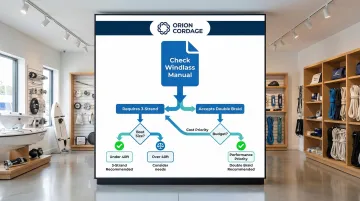
- Windlass compatibility: Check your windlass manufacturer's specifications before purchasing. Lewmar gypsies work with 3-strand and 8-plait, while Muir windlasses specifically require 3-strand. Using incompatible rope causes slippage, jamming, or equipment damage.
- Boat size and weight: Vessels under 40 feet typically find 3-strand adequate, while larger boats benefit from double braid's higher strength-to-diameter ratio.
- Anchoring conditions: Choppy conditions with frequent load cycling favor 3-strand's shock absorption. Steady deep-water anchoring suits double braid's consistency.
- Budget: 3-strand costs less initially but may stiffen over time. Double braid's higher upfront cost can be offset by longer service life and better handling.
These factors interact differently for each vessel, so let's examine the specifics in more detail.
Windlass Compatibility Comparison
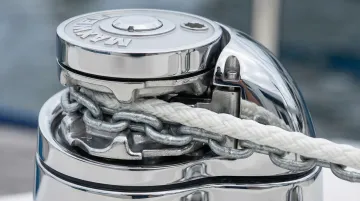
3-Strand compatibility: Works with most traditional windlasses from Lewmar, Maxwell, and Muir. The twisted construction provides texture that gypsies can grip effectively.
Double Braid compatibility: Requires windlasses with gypsies specifically designed for braided rope. The smooth surface can slip on gypsies designed for 3-strand's texture.
Critical instruction: Always consult your windlass manual before purchasing. Using incompatible rope voids warranties and creates safety hazards.
Performance in Different Conditions
3-strand excels when:
- Anchoring in areas with choppy water and frequent load cycling
- Maximum shock absorption is needed to protect deck hardware
- Budget constraints limit options
- Easy field repairs and splicing are priorities
Double braid excels when:
- Deep-water anchoring requires consistent scope calculations
- Steady loads without frequent surging are typical
- Maximum strength in minimum diameter is needed
- Smooth handling and compact storage are priorities
Clear Situational Recommendations
Choose 3-strand if you:
- Have a traditional windlass requiring 3-strand or 8-plait
- Prioritize cost savings (20-30% less expensive)
- Need maximum shock absorption for choppy conditions
- Want easy DIY splicing capability
- Own a boat under 40 feet
Choose double braid if you:
- Need maximum strength-to-diameter ratio
- Have limited anchor locker space
- Prioritize smooth, soft handling characteristics
- Own a modern windlass designed for braided rope
- Anchor frequently in deep water
Hybrid Option
Some experienced boaters use 3-strand as primary rode and carry double braid as backup, or vice versa. This allows them to benefit from 3-strand's shock absorption for typical anchoring while having double braid's strength available for extreme conditions.
However, this approach requires carrying two complete anchor systems or learning to splice different constructions together—a complex undertaking.
Real World Examples
A Great Lakes cruiser operating a 38-foot sailboat faced recurring windlass jamming issues with his original double braid anchor rode. Despite the rope's excellent handling characteristics, his Lewmar windlass—designed specifically for 3-strand—couldn't grip the smooth braided surface reliably.
In moderate winds, the rode would slip on the gypsy, requiring manual hauling.
After consulting his windlass manual and confirming it specified 3-strand or 8-plait only, he switched to quality 3-strand nylon manufactured in North America.
The change was immediate: the windlass gripped positively, jams disappeared entirely, and anchor retrieval became reliable even in 20-knot winds.
The specific outcomes included:
- Zero windlass jams over the following two seasons (previously 3-4 jams per season)
- Improved shock absorption that reduced stress on deck cleats during overnight anchoring in wave action
- Cost savings of approximately 25% compared to replacing with equivalent diameter double braid
- Extended service life projection due to proper windlass compatibility
Windlass compatibility isn't optional—it's fundamental. Using rope that matches your windlass manufacturer's specifications prevents equipment damage, ensures reliable operation, and enhances safety. Investing in quality rope from established manufacturers with proven track records provides better long-term value than choosing based solely on handling characteristics or strength numbers.
Before purchasing anchor line: Check your windlass manual for rope specifications, measure your current rode diameter accurately, and consult with marine supply experts to ensure compatibility. The right rope for your neighbor's boat may be completely wrong for yours.
Conclusion
The right anchor line choice depends on windlass compatibility, boat size, anchoring conditions, budget, and personal preferences. Choosing compatible rope prevents windlass damage and ensures reliable anchor retrieval.
Selecting appropriate stretch characteristics protects deck hardware from shock loads. Quality rope from established manufacturers—like Orion Cordage, manufacturing marine cordage solutions since 1856—enhances safety and reduces long-term replacement costs.
Quick selection guide:
- Boats under 40 feet with traditional windlasses: 3-strand delivers proven performance, excellent shock absorption, and cost-effectiveness
- Larger vessels with modern windlasses: Double braid offers superior handling, compact storage, and maximum strength-to-diameter ratio
- All anchor lines: Maintain proper scope ratios of 7:1 for normal conditions and up to 10:1 for heavy weather
The most critical decision isn't which construction is "better" in the abstract—it's which construction matches your specific windlass, vessel, and anchoring requirements.
Frequently Asked Questions
What type of rope is best for an anchor line?
Nylon is the best material for anchor lines due to its strength, stretch, and UV resistance. Choose 3-strand for cost savings and shock absorption, or double braid for maximum strength and handling—but check your windlass manual first for compatibility.
What is the difference between double-braid and 3-strand anchor lines?
3-strand is twisted rope with 15-20% stretch, easy DIY splicing, and lower cost. Double braid offers 25-35% higher strength, torque-free handling, smooth windlass feeding, and compact storage at a premium price.
How do I know which anchor line is compatible with my windlass?
Check your windlass manufacturer's manual for rope specifications. Most Lewmar and Maxwell windlasses require 3-strand or 8-plait, while some modern windlasses are designed for double braid. Using incompatible rope causes slippage, jamming, and potential equipment failure.
Can I splice my own anchor line?
3-strand splicing is straightforward and can be learned by most boaters with practice and basic marlinspike skills. Double braid splicing is significantly more complex, requiring specialized techniques and often professional service or advanced training to ensure structural integrity.
How long should my anchor line be?
Anchor rode length should be 7-10 times the depth you'll be anchoring in. Most recreational boaters carry 150-300 feet of rode, using 7:1 scope for normal conditions and 10:1 for heavy weather.
Does anchor line stretch affect holding power?
Moderate stretch (like in 3-strand) actually improves holding by absorbing shock loads and keeping the anchor set during wave action and wind gusts. Too little stretch can cause the anchor to break free during load surges, while excessive stretch makes scope calculations less predictable.