The stakes extend beyond immediate anchoring reliability. Incorrect anchor line sizing affects crew safety during deployment and retrieval, shortens equipment longevity through excessive wear, and undermines peace of mind during overnight anchoring or when weather deteriorates unexpectedly. Your anchor rode represents the single connection point between your vessel and security—getting the specifications right matters.
TL;DR
- Anchor line sizing depends on boat length, displacement, and typical anchoring conditions
- Use 1/8" rope diameter for every 9 feet of boat length as a baseline
- Nylon three-strand or double-braid provides essential shock absorption through 15-30% stretch
- Combine chain (at anchor end) with rope for abrasion protection and proper scope angle
- Deploy 7:1 scope ratio (7 feet of rode per 1 foot of depth) for reliable holding power
What is Anchor Line (Rode)?
Anchor rode is the complete connection system between your boat and anchor, encompassing everything from the anchor attachment point to where it secures to your boat's cleat or windlass.
This system typically consists of rope, chain, or—most commonly—a combination of both materials working together.
The term "rode" isn't just maritime jargon; it specifically refers to the entire anchor line assembly that must accomplish multiple critical functions simultaneously.
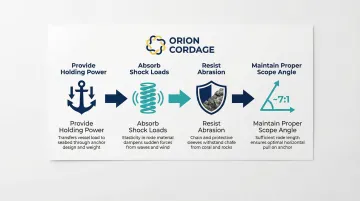
Your rode must:
- Provide holding power by transmitting loads from the boat to the anchor
- Absorb shock loads through material elasticity
- Resist abrasion from contact with the seabed
- Maintain proper scope angle that allows the anchor to set securely in the bottom
Understanding Anchor Line Components
Modern anchor rode systems consist of distinct components, each engineered for specific purposes that contribute to overall anchoring performance and safety.
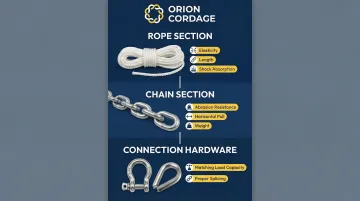
Rope Section
Rope provides the primary length and elasticity in most recreational anchor systems. Nylon is the preferred material because its 15-30% stretch at breaking strength absorbs shock loads from waves and wind gusts that would otherwise stress deck hardware or dislodge the anchor.
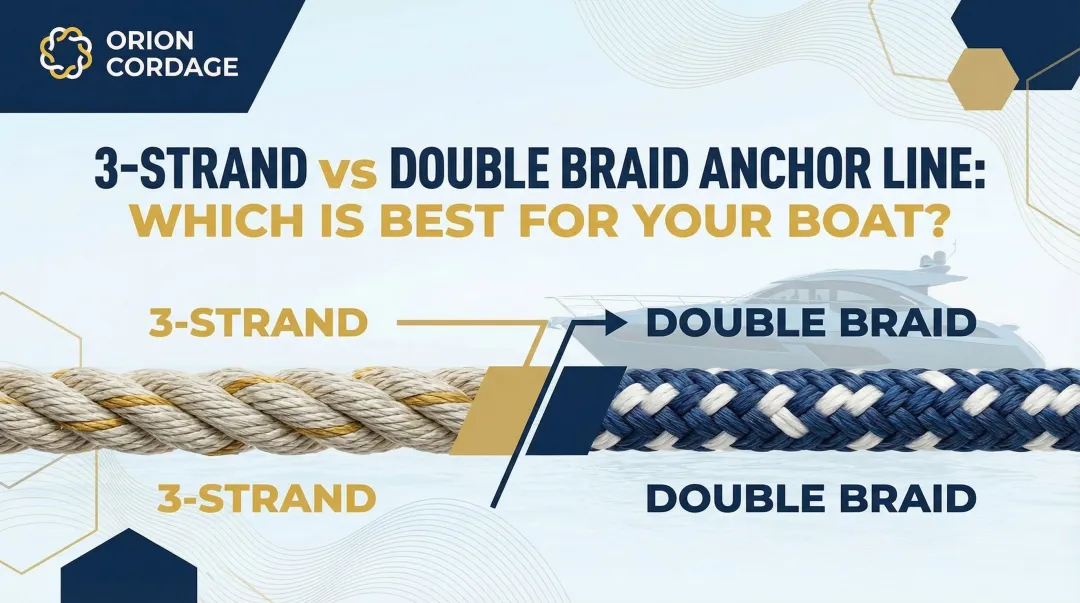
Two main rope constructions dominate the market:
- Three-strand twisted - Traditional construction offering maximum stretch, easy splicing, and cost-effectiveness, though it can stiffen over time
- Double-braid - Stronger per diameter with superior abrasion resistance and smoother handling, but less stretch and more difficult to splice
Chain Section
While rope provides elasticity and length, chain serves three critical functions at the anchor end of your rode:
- Resists abrasion on rocky or coral bottoms where rope would quickly chafe through
- Keeps the anchor pull horizontal rather than angled upward, essential for proper anchor setting
- Adds shock absorption through its catenary (the curve it forms along the bottom)
Chain diameter should match your rope's working load capacity. Recreational boats typically use 1/4" to 1/2" chain, with 6 to 30 feet being common lengths.
Grade 43 (G4) high-test chain offers approximately twice the working load of Grade 30 (BBB) chain, allowing you to use smaller, lighter chain without sacrificing strength.
Connection Hardware
Quality shackles, thimbles, and splices represent critical connection points that must match or exceed your rode's working load. Weak links here defeat the purpose of properly sized rope and chain.
Windlass users face an additional consideration: chain type must match windlass specifications. Gypsies are machined for specific chain dimensions, and using G4 chain on a BBB gypsy causes slippage and equipment damage.
Similarly, rope-to-chain splices must be properly executed to pass smoothly through the windlass gypsy without jamming.
What to Consider When Choosing the Right Anchor Line Size
Anchor line selection isn't one-size-fits-all. Multiple factors interact to determine optimal rode specifications for your specific boat and usage patterns, balancing safety requirements against practical considerations like storage space, weight, and handling ease.
Boat Length and Displacement
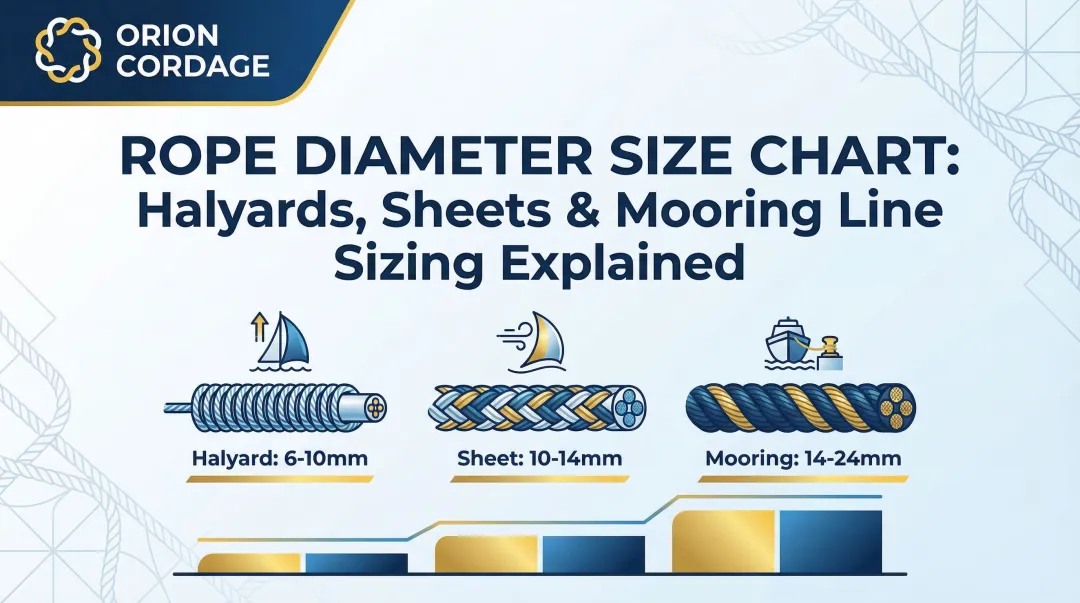
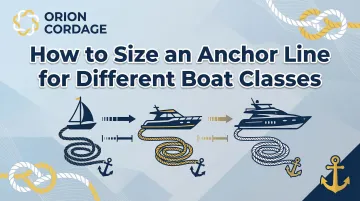
Boat length serves as the primary sizing factor, with the general rule being 1/8" rope diameter per 9 feet of boat length:
- 20-25' boat → 3/8" diameter minimum
- 27-36' boat → 1/2" diameter
- 40-50' boat → 5/8" diameter
Heavier displacement boats or those with high windage (tall superstructures, flying bridges, large cabin profiles) should size up one diameter increment.
A 30-foot trawler with a flying bridge experiences significantly more wind load than a 30-foot center console, requiring stronger rode.
Water Depth and Scope Requirements
Scope is the ratio of rode length to water depth plus freeboard (bow height above water). A 5:1 scope represents the minimum for calm conditions, while 7:1 is recommended for overnight anchoring or moderate weather.
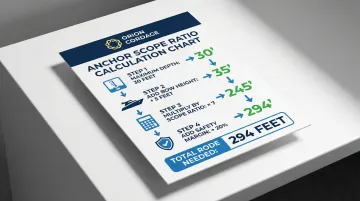
Calculate total rode length needed:
- Multiply maximum anchoring depth by 7
- Add your bow height above water
- Add 20% safety margin
Example: 30' depth + 5' bow height = 35' total × 7 scope = 245' minimum rode, plus 49' safety margin = 294' total recommended.
Anchoring Conditions and Bottom Type
Bottom type directly affects rode requirements:
- Soft mud or sand: Require longer scope and may benefit from additional chain weight to maintain proper angle
- Rocky or coral: Demand more chain length for abrasion protection. Rope contact with sharp surfaces will quickly compromise strength
- Tidal areas: Need extra rode length to handle depth changes. A 12-foot tide can reduce 7:1 scope to dangerous 5:1 if not calculated using high-tide depth
- Current-prone areas: Benefit from heavier chain to maintain proper scope angle against current forces
Material Selection and Rope Type
Nylon is the gold standard for anchor rode due to its shock-absorbing stretch, UV resistance, and durability. Three-strand nylon suits traditional boats and offers easy splicing, while double-braid nylon works better with modern windlasses and provides smoother handling.
Polyester has minimal stretch, making it suitable for permanent moorings where constant tension is desired, but poor for anchoring applications requiring shock absorption.
Polypropylene floats and degrades quickly under UV exposure. Use it only for emergencies, not as primary anchor rode.
For optimal performance, specify UV-stabilized nylon rope designed specifically for marine applications.
Working Load and Safety Factors
Material choice connects directly to load requirements. Your anchor rode must handle not just static boat weight but dynamic loads from wind and waves.
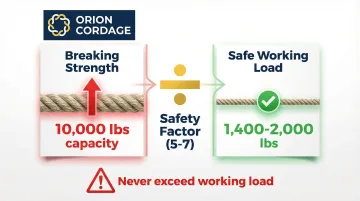
Industry standards recommend safety factors of 5:1 to 10:1 between breaking strength and working load, with 8:1 being common for life-safety applications.
To verify adequate diameter:
- Research the breaking strength of specific rope products
- Divide by your safety factor (typically 5-7)
- Compare the result to estimated maximum loads your boat will experience
This ensures your rode maintains safe margins even under severe conditions.
How to Calculate the Right Anchor Line Length for Your Boat
Follow this systematic approach to determine exact rode length requirements based on your boat specifications and typical anchoring scenarios.
Step 1: Determine Your Maximum Anchoring Depth
Identify the deepest water you typically anchor in, then add 10-20% for unexpected situations or new cruising areas.
Consult navigation charts for your regular anchoring grounds and add your bow height above the waterline to get total vertical distance from bow roller to seabed.
Step 2: Apply the Scope Ratio
Multiply maximum depth (including bow height) by a scope of 7 for all-around security—this gives you your minimum rode length needed for safe anchoring.
Example: 30' depth + 5' bow height = 35' total × 7 scope = 245' minimum rode length required
This 7:1 ratio ensures the anchor pulls horizontally for maximum holding power rather than at an upward angle that could break it free.
Step 3: Account for Chain-to-Rope Ratio
The common configuration uses 1 foot of chain per foot of boat length, with minimum 20-25 feet recommended.
For a 30-foot boat, this means 30 feet of chain with the remainder being rope.
Boats using windlasses may carry more chain (up to 50% of total rode) since mechanical retrieval handles the weight easily. Small boats with manual retrieval should minimize chain weight to maintain practical handling—20-25 feet of chain provides adequate abrasion protection without excessive weight.
Step 4: Add Safety Margin
Add 20-30% extra rode length beyond calculated minimum. This buffer accounts for:
- Extreme weather requiring additional scope
- Deeper-than-expected anchoring locations
- Rode damage requiring shortening
- Tidal variations exceeding normal ranges
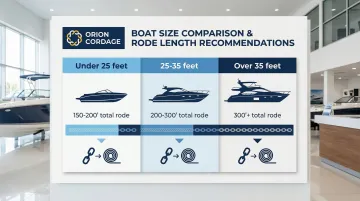
Practical rode length recommendations:
- Boats under 25' → 150-200' total rode
- 25-35' boats → 200-300' total rode
- Boats over 35' → 300'+ total rode
How Orion Cordage Can Help
Orion Cordage brings over 168 years of rope manufacturing expertise to the marine industry, serving both commercial and pleasure marine sectors with anchor lines designed specifically for demanding conditions.
Based in North America with manufacturing facilities in the USA and Canada, Orion produces marine-grade anchor ropes that ensure consistent quality and reliability when anchor safety matters most.
Their anchor line portfolio includes both three-strand twisted and double-braid nylon constructions across all standard marine diameters:
- Superior 3-Strand Nylon – break forces up to 319,600 lbs
- Industrial 3-Strand Nylon – heavy-duty capability for larger vessels
- Double Braid Nylon – break forces up to 340,000 lbs with enhanced handling
All Orion marine anchor lines feature UV-stabilization and engineering for saltwater environments, providing the abrasion resistance and controlled elongation essential for reliable anchoring.
The company's domestic manufacturing delivers industry-leading product availability with tight lead times, meaning marine retailers and boaters can source the right anchor line without extended waits.
Orion's technical expertise extends to custom manufacturing capabilities for specialized vessel requirements or unique anchoring applications. Whether you need standard anchor rode configurations or custom solutions tailored to specific operational demands, their engineering team can provide guidance and product specifications matched to your vessel class and typical anchoring conditions.
Conclusion
Sizing your anchor line properly requires careful consideration of boat size, anchoring depths, environmental conditions, and material properties. The goal isn't simply following generic sizing charts but understanding how these factors interact.
This knowledge helps you determine optimal rode specifications for your specific vessel and cruising patterns.
Key sizing steps:
- Start with 1/8" diameter per 9 feet of boat length, then adjust for displacement, windage, and bottom conditions
- Calculate required length using 7:1 scope ratio with appropriate safety margins
- Select UV-stabilized nylon rope in three-strand or double-braid construction based on handling preferences and windlass requirements
Inspect your anchor rode regularly for UV damage, excessive wear, stiffness, or chafe. Replace it when showing signs of degradation or after any shock-loading event.
Investing in quality marine-grade rope from established domestic manufacturers like Orion Cordage—producing reliable cordage since 1856—ensures performance during critical moments when your boat's security depends entirely on that connection between bow and seabed.
Frequently Asked Questions
What size anchor line should I use?
Apply the 1/8" diameter per 9 feet of boat length rule: 20-25' boats use 3/8" nylon, 30-35' boats use 1/2", and 40-50' boats use 5/8" diameter. Adjust up one size for heavy displacement or high windage vessels.
What is the 7:1 anchor rule?
Deploy 7 feet of anchor rode for every 1 foot of water depth (measured from bow to bottom). This ratio ensures the anchor pulls horizontally for maximum holding power rather than at an upward angle.
How much anchor line do I need for my boat?
Multiply your deepest anchoring depth by 7, then add 20-30% safety margin. Minimums: 150-200' for boats under 25', 200-300' for 25-35' boats, and 300'+ for larger vessels.
What type of rope is best for anchor lines?
Three-strand or double-braid nylon rope is best for anchoring due to shock-absorbing stretch (15-30%), UV resistance, and durability in marine environments. Avoid polypropylene except for emergency use.
Do I need chain with my anchor rope?
Yes, minimum 10-20 feet of chain between anchor and rope prevents abrasion and maintains proper anchor angle. Ideal configuration uses 1 foot of chain per foot of boat length for optimal performance.
How often should I replace my anchor line?
Inspect before each season and replace when showing UV damage, excessive wear, stiffness, or after shock-loading events. Nylon loses approximately 10% strength yearly under UV exposure; replace every 3-5 years for regularly used boats.