Introduction
The rope construction you choose directly determines whether your rigging operation succeeds or fails. The wrong choice can lead to equipment damage, operational delays, and serious safety incidents.
In industrial settings where loads weigh thousands of pounds and workers depend on reliable equipment, selecting between 3-strand twisted and 12-strand braided rope affects everything from load capacity and flexibility to durability and total cost of ownership.
Synthetic rope failures remain a persistent industrial hazard, with synthetic slings involved in 87% of sling-related accidents. The stakes are high, and proper rope selection is your first line of defense against preventable failures.
Understanding these construction differences is essential for safe, effective rigging operations. This article breaks down the critical differences between 3-strand and 12-strand rope constructions, providing the technical data and practical guidance you need to make the right choice for your specific rigging requirements.
Key Takeaways
- 3-strand twisted rope: excellent pulling strength, easy field splicing, cost-effective for straightforward lifting
- Superior flexibility with 12-strand braided rope—zero rotation under load, runs smoothly through pulleys and complex rigging
- Choose based on load characteristics, rigging complexity, environmental exposure, and budget
- Each construction type excels in different scenarios
3-Strand vs 12-Strand Rope: Quick Comparison
| Feature | 3-Strand Twisted | 12-Strand Braided |
|---|---|---|
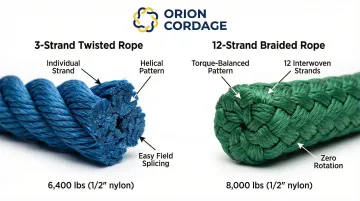
| Construction Type | Three twisted strands laid in helical pattern | 12 interwoven strands in torque-balanced pattern |
| Strength-to-Weight Ratio | Good (6,400 lbs for 1/2" nylon) | Superior (8,000 lbs for 1/2" nylon - 25% stronger) |
| Flexibility | Moderate; adequate for general rigging | Exceptional; ideal for complex configurations |
| Splicability | Easy field splicing with basic techniques | Requires specialized tools and training |
| Rotation Under Load | Moderate rotation; can kink or hockle | Zero rotation; torque-neutral design |
| Cost | Lower initial investment | Higher upfront cost; better long-term value for demanding applications |
What is 3-Strand Rope?
3-strand rope represents the traditional backbone of industrial rigging. This construction twists fibers into yarns, yarns into strands, and then lays three strands together in a helical pattern.
Despite newer braided designs, this time-tested construction remains popular because it delivers reliable performance at an accessible price point.
Core benefits include:
- Handles heavy loads effectively, with products like Orion Cordage's Industrial 3-Strand Nylon reaching 357,000 lbs maximum break force
- Allows controlled elongation through twisted construction, making it ideal for dynamic loads and shock absorption
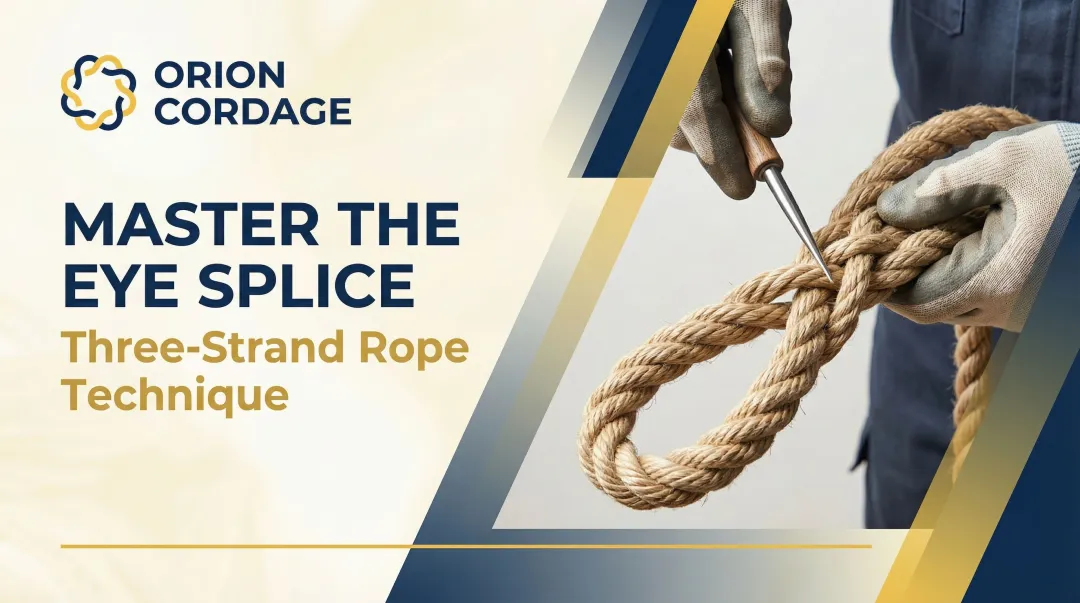
- Enables secure field splicing—users can create loops and terminations by weaving rope ends back into the main body without specialized tools
- Offers better pricing for bulk applications due to lower manufacturing complexity
Material Options and Performance Characteristics
Nylon 3-Strand: Offers exceptional elasticity with 7.80% elongation at 10% of break strength and 15.90% at 30% of break strength. This high stretch capability makes nylon ideal for shock-load applications like towing and mooring. Nylon loses approximately 10-15% of its strength when wet.
Polyester 3-Strand: Provides similar strength to nylon but with lower stretch and superior UV resistance. Polyester maintains full strength when wet, making it the preferred choice for outdoor rigging applications and long-term installations exposed to sunlight.
Polypropylene 3-Strand: The economical option that floats and resists rot, oils, and gasoline. While susceptible to UV degradation without stabilizers, treated polypropylene serves well in marine barriers, floating applications, and temporary rigging setups.
Load Behavior and Inspection Advantages
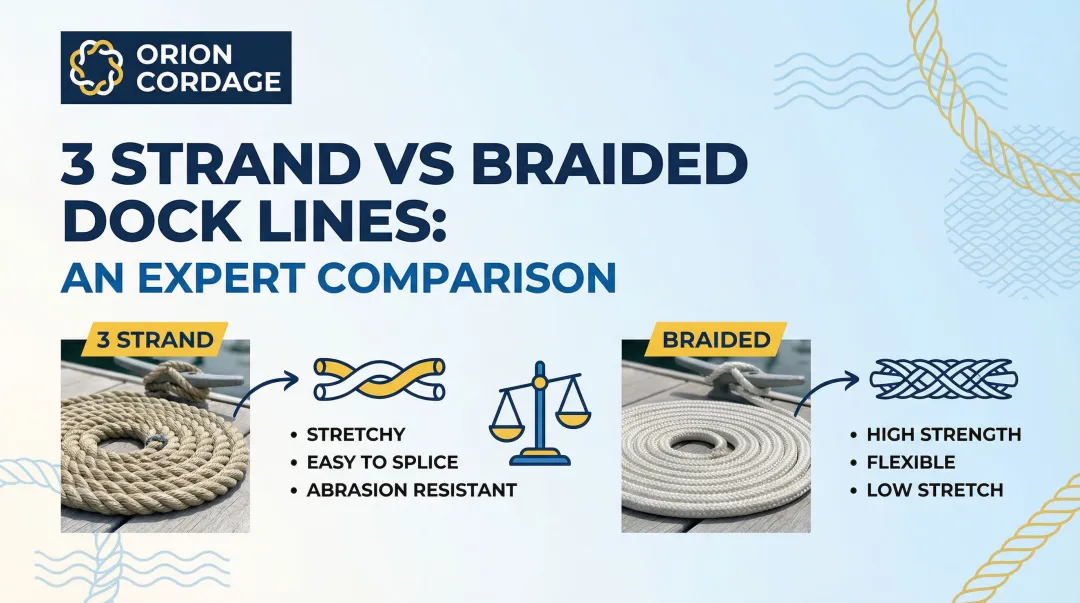
3-strand rope shows natural lay tension—it rotates slightly under load due to the twisted construction. This torque coupling can lead to kinking or "hockling" if not properly managed in rigging configurations.
The twisted construction makes inspection straightforward. You can twist the rope open to examine internal fibers for powdering or damage, and individual strand wear is immediately visible. Retirement criteria are clear: retire the rope when any strand shows 10% wear or when one or more strands are cut.
Use Cases of 3-Strand Rope in Industrial Rigging
3-strand rope dominates applications where moderate flexibility meets cost efficiency requirements:
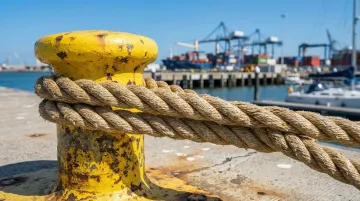
- Marine operations: Standard for mooring lines, anchor lines, and towing operations where shock absorption is critical
- Utility work: Relies on 3-strand polyester for transmission stringing and cable pulling where low stretch and UV resistance matter most
- Construction sites: Used for general lifting, securing loads, and temporary rigging where easy splicing enables quick field modifications
Orion Cordage's 3-strand products serve these sectors extensively. Their Prodac® 3-Strand Combination rope, combining polyester, polypropylene, and co-polymer materials, achieves 357,000 lbs maximum break force for the most demanding ship-to-ship operations and barge lines. For general industrial applications, their Industrial 3-Strand Nylon provides reliable performance with break forces ranging from 104,550 to 357,000 lbs depending on diameter.
What is 12-Strand Rope?
12-strand rope represents modern braided engineering designed to eliminate the limitations of twisted construction. This design interweaves 12 individual strands in a torque-balanced pattern, using equal numbers of left-twist and right-twist strands to neutralize rotational forces.
Core benefits include:
- Exceptional flexibility: Coils easily, resists tangling, and handles smoothly in complex rigging configurations
- Zero rotation under load: Torque-neutral design prevents kinking and hockling entirely
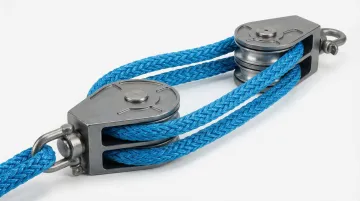
- Smooth hardware operation: Runs cleanly through pulleys, blocks, and winches with minimal friction
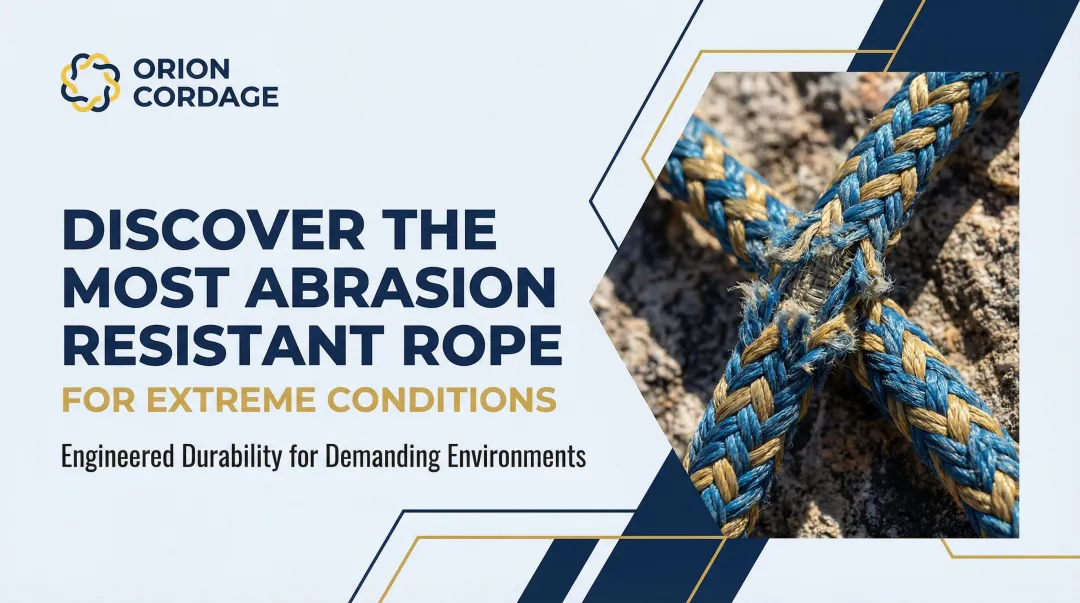
- Superior surface abrasion resistance: The braided structure flattens slightly under load, distributing wear across a larger surface area rather than concentrating it on high points
Load Distribution and Performance Characteristics
The braided construction distributes load more evenly across the rope's cross-section compared to twisted designs. This results in up to 28.7% higher strength-to-weight ratios—a 1/2-inch 12-strand polyester rope offers 8,000 lbs tensile strength versus 6,400 lbs for 3-strand polyester of the same diameter.
The multiple interwoven strands flex independently, reducing stress concentration points that cause premature failure in twisted ropes subjected to repeated bending through pulleys or around sheaves.
Inspection Considerations
While 12-strand rope offers performance advantages, inspection requires more attention. The braided cover can conceal internal core damage, making visual assessment more challenging than with 3-strand rope. Retirement thresholds differ as well: 12-strand rope should be retired when it shows 25% wear or when 2 or more adjacent strands are cut. Regular tactile inspection—running the rope through your hands to feel for inconsistencies, flat spots, or stiff sections—becomes essential for detecting hidden damage.
Use Cases of 12-Strand Rope in Industrial Rigging
Understanding these performance characteristics helps identify where 12-strand rope delivers the greatest operational value:
- Crane operations: Torque-free behavior prevents load spinning during lifts with multiple direction changes
- Precision lifting: Manufacturing and equipment installation applications demand predictable handling characteristics
- Fall protection systems: Superior strength-to-weight ratio and consistent performance meet strict safety requirements
- Power utility applications: Underground cable pulling and transmission stringing require low stretch and high strength
- Commercial marine operations: Vessel mooring and tug winch lines benefit from floating characteristic and wet/dry abrasion resistance
Orion Cordage's Powerplex 12-Strand Polyester features specialized one-in-train construction that maximizes strength while maintaining flexibility, achieving 189,000 lbs maximum break force. Their Dynaplex 12 Strand HMPE (High Modulus Polyethylene) delivers the same impressive strength with even better strength-to-weight characteristics, weighing just one-ninth of steel wire rope while offering superior chemical and UV resistance.
3-Strand vs 12-Strand: What is Better?
Neither construction is universally superior—the right choice depends on your specific operational requirements, budget constraints, and performance priorities.
Strength Characteristics
Both constructions deliver impressive tensile strength, but 12-strand rope typically offers higher breaking strength at equivalent diameters:
Breaking Strength Comparison (1/2" Diameter):
- Nylon 3-Strand: 6,400 lbs tensile strength
- Nylon 12-Strand: 8,000 lbs tensile strength (25% stronger)
- Polyester 3-Strand: 6,400 lbs tensile strength
- Polyester 12-Strand: 8,000 lbs tensile strength
For extreme applications, HMPE 12-strand rope can exceed 30,000 lbs break strength at 1/2" diameter, significantly outperforming conventional materials.
Flexibility and Handling
12-strand rope's superior flexibility benefits complex rigging systems with multiple direction changes, tight bends, or frequent reconfiguration.
The torque-neutral design eliminates rotation under load, preventing the kinking and hockling issues that plague 3-strand rope in certain applications.
3-strand rope's moderate flexibility works well for straightforward lifting applications.
For simple point-to-point rigging or applications where the rope hangs vertically without direction changes, the flexibility advantage of 12-strand construction provides minimal practical benefit.
Durability and Lifespan
Abrasion resistance differs between constructions. 12-strand rope distributes wear over a larger surface area, while 3-strand rope concentrates wear on the crowns of individual strands.
In applications involving frequent contact with rough surfaces or repeated running through hardware, 12-strand construction typically delivers longer service life.
UV degradation depends primarily on material choice rather than construction:
- Polyester: Best UV resistance for both constructions, 3-5 years outdoor service life
- Nylon: Degrades faster under UV exposure, 1-2 years service life
- Polypropylene: Deteriorates rapidly without UV stabilizers
Chemical resistance also relates more to fiber material than construction type. Both nylon and polyester resist most common industrial chemicals, though nylon should avoid strong alkalis and polyester should avoid strong acids.
Cost Considerations
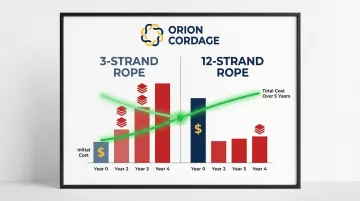
3-strand rope costs less initially due to simpler manufacturing processes. For budget-conscious projects or applications requiring large quantities of rope with moderate performance requirements, 3-strand construction delivers excellent value.
12-strand rope commands premium pricing—typically 2-4 times more than comparable 3-strand rope.
Total cost of ownership calculations should factor in longer service life, reduced replacement frequency, improved operational efficiency, and better performance characteristics. In high-cycle operations or applications where downtime carries significant cost penalties, the initial investment in 12-strand rope often pays dividends.
Situational Recommendations
Choose 3-Strand Rope When:
- Budget constraints are significant
- Rigging configuration is straightforward with minimal direction changes
- Easy field splicing is important for your operation
- Shock absorption is beneficial (dynamic loads, towing)
- Applications don't require frequent running through hardware
Choose 12-Strand Rope When:
- Complex rigging systems involve multiple pulleys or direction changes
- Zero rotation under load is critical for safety or precision
- High-cycle operations demand maximum durability
- Smooth operation through hardware reduces wear and friction losses
- Superior strength-to-weight ratio provides operational advantages
Real World Examples
Marine Mooring Application: Zero Failures After Switching to 12-Strand
BW Fleet Management experienced repeated failures with jacketed HMPE mooring lines, including seven failures on a single vessel.
The jacket concealed internal core damage, making proactive inspection impossible and creating dangerous situations where rope condition couldn't be reliably assessed.
The fleet switched to 12-strand non-jacketed HMPE lines, allowing crews to visually monitor rope condition directly.
After two years and over 1,500 service hours, the fleet reported zero mooring incidents. The change enabled proactive maintenance based on actual rope condition rather than guesswork.
Logging Operations: Efficiency Gains with 12-Strand HMPE
Oregon State University evaluated synthetic rope as a steel wire rope replacement in static logging rigging. They replaced steel lines with 12-strand braided HMPE rope, which weighs just one-ninth of equivalent steel cable.
Rigging times decreased by about two minutes per intermediate support—a significant efficiency gain when multiplied across daily operations. Despite higher initial costs, the weight reduction and handling improvements demonstrated clear value.
After 3.25 years of service, residual strength testing showed the ropes retained 38% of catalog breaking strength, highlighting the importance of defined retirement schedules but also confirming years of productive service life.
Orion Cordage: Domestic Manufacturing Quality
Orion Cordage's domestic manufacturing facilities in the USA and Canada produce both 3-strand and 12-strand ropes that customers consistently choose for demanding industrial applications. A branch manager from a major American rigging distributor notes: "Our customers know they are getting very high quality domestic product, the prices are great, and their lead times are always tight."
The company's 168-year manufacturing heritage supports rigorous quality control throughout the production process.
Their Powerplex 12-Strand Polyester and Industrial 3-Strand Nylon products serve industries ranging from commercial marine operations to power utilities, delivering the reliability that comes from complete control over design, manufacturing, and testing.
Choosing the right rope for your industrial rigging operation requires understanding your specific application demands. Contact Orion Cordage at 877-224-2673 or sales@orionropeworks.com to discuss your rigging requirements with our experienced team.
Conclusion
Neither 3-strand nor 12-strand rope is universally "better"—the optimal choice depends on your specific rigging requirements, operational conditions, and performance priorities.
3-strand rope delivers excellent strength, easy splicing, and cost-effective performance for straightforward applications. 12-strand rope provides superior flexibility, zero rotation, and enhanced durability for complex rigging systems.
Proper rope selection directly impacts:
- Worker safety and injury prevention
- Equipment longevity and replacement costs
- Operational efficiency and downtime
- Total cost of ownership across rope lifecycle
By matching rope construction to your actual operational needs rather than defaulting to familiar options, you maximize both safety and value. Orion Cordage manufactures both 3-strand and 12-strand rope solutions across diverse materials—our technical team can help identify the optimal construction for your specific rigging applications.
Frequently Asked Questions
How strong is a 3-strand cord?
Strength depends on diameter and material. A 1/2" nylon 3-strand rope typically offers around 6,400 lbs tensile strength with a working load limit of approximately 1,280 lbs (using a 5:1 safety factor). Larger diameters provide proportionally higher strength—a 1" nylon 3-strand rope reaches approximately 25,000 lbs break strength.
What is 12 strand rope?
12-strand rope is a braided construction with 12 interwoven strands arranged in a torque-balanced pattern. This design eliminates rotation under load, provides exceptional flexibility, and runs smoothly through rigging hardware with superior abrasion resistance.
Which rope type is better for heavy lifting in industrial rigging?
Both handle heavy loads when properly rated. A 1/2" 12-strand rope offers about 25% more breaking strength than equivalent 3-strand. However, 12-strand excels in complex rigging with multiple pulleys, while 3-strand provides excellent performance in straightforward lifting with better cost efficiency and easier field splicing.
Can 3-strand and 12-strand ropes be spliced?
3-strand rope is easily field-spliced using traditional techniques most riggers can learn quickly. 12-strand rope requires more specialized splicing skills and tools, but properly trained personnel can create Class I eye splices that retain 90-100% of the rope's original strength.
How do I inspect 3-strand vs 12-strand rope for damage?
3-strand rope shows wear in individual strands and can be twisted open to inspect for internal damage. Retire when any strand shows 10% wear or one or more strands are cut. For 12-strand, check both cover and core integrity by feeling for flat spots or stiff sections. Retire when wear exceeds 25% or when 2+ adjacent strands are cut.
What's the typical lifespan of 3-strand vs 12-strand rope in industrial applications?
Lifespan depends on usage intensity, environmental conditions, and maintenance rather than construction type. Polyester ropes typically last 3-5 years outdoors due to superior UV resistance, while nylon lasts 1-2 years in direct sunlight. Both constructions provide years of reliable service when properly selected, used within rated capacities, and regularly inspected.