Introduction: Why Arborists Are Rethinking Their Rope Choices
Professional tree care is experiencing a fundamental equipment shift. Arborists who've relied on steel cable for decades are now making a decisive move to synthetic rope—not as a passing trend, but as a practical evolution driven by measurable safety improvements and technological breakthroughs in rope materials.
The catalyst isn't just better products. It's a convergence of factors:
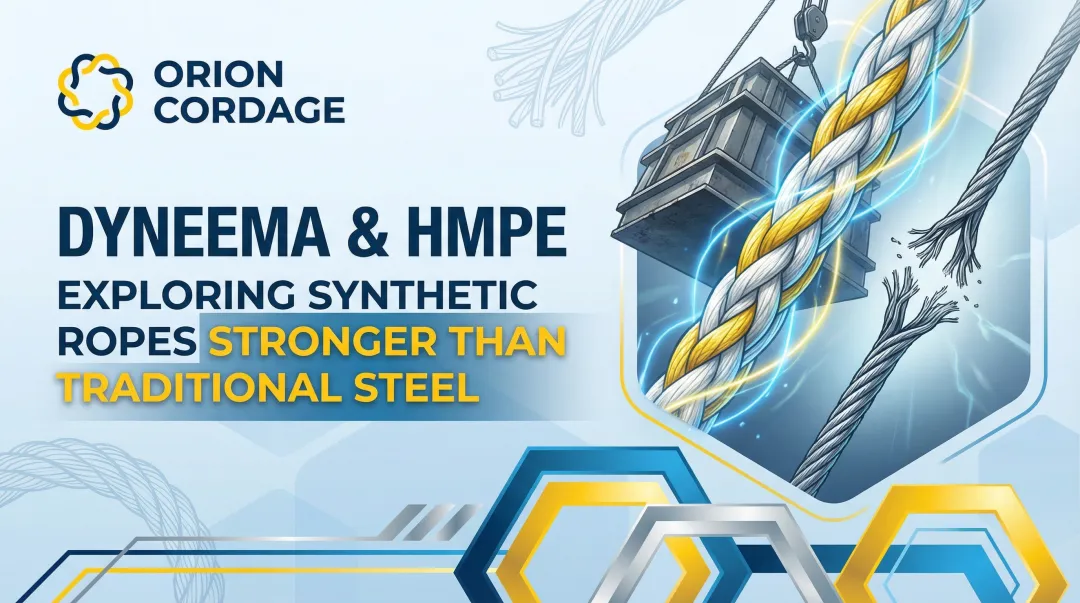
- HMPE (High Modulus Polyethylene) ropes that match or exceed steel's strength at a fraction of the weight
- Documented safety advantages that reduce catastrophic failure risks
- Changing industry standards from organizations like the ISA and TCIA that reflect these material advances
This article explores the specific reasons behind this transition, the tangible benefits arborists report after making the switch, and the practical considerations tree care professionals should weigh when evaluating synthetic rope for their operations.
TLDR: Quick Summary
- Synthetic ropes are 7-9× lighter than steel cable at equal strength
- Eliminates deadly "whiplash" recoil if rope fails
- No sharp burrs or kinking improves handling safety and crew comfort
- Modern UV-resistant coatings address early durability concerns
- Requires training on inspection and replacement protocols
Understanding the Industry Shift: Why Now?
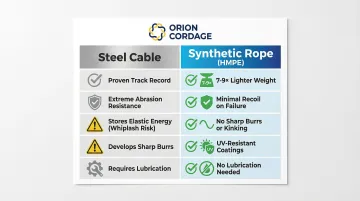
Steel cable has been the default rigging material in arboriculture for generations. Its proven track record, extreme abrasion resistance, and predictable performance made it the conservative choice for tree care operations where safety is paramount.
Material science breakthroughs in the 1990s and 2000s changed that landscape.
The Technology That Made It Possible
HMPE fibers—commercially known as Dyneema and Spectra—were first developed in the 1970s and 1980s, but arborist-specific products didn't emerge until the 1990s. A pivotal moment came in 1996 when Samson Rope introduced AmSteel-Blue, a 100% Dyneema fiber rope that proved synthetic materials could genuinely replace steel wire in demanding applications.
By 2010, manufacturers were developing HMPE ropes with proprietary coatings specifically designed to reduce internal abrasion—addressing one of the primary concerns that had kept arborists loyal to steel.
Industry Adoption Indicators
While precise adoption statistics aren't publicly tracked by major associations, the shift is evident in multiple ways. Trade publications like TCI Magazine now regularly feature synthetic rope selection guides and maintenance protocols, reflecting widespread operational changes across the industry.
Field results demonstrate the practical advantages:
- SUNY College of Environmental Science and Forestry: Replaced steel wire rope with UHMWPE rope, reporting flawless performance and reduced damage to residual trees due to easier maneuverability
- USDA Forest Service trials: Testing with 5/8-inch UHMWPE rope showed operators consistently preferred the ease of splicing and lightweight handling over traditional steel
Regulatory Environment
Professional arborist organizations haven't mandated the switch, but they've created the framework that allows it. Both ISA and TCIA reference ANSI Z133 safety standards, which take a performance-based approach—specifying required tensile strength and safety factors rather than dictating specific materials.
Arborists can adopt synthetic rope as long as it meets the necessary strength requirements and is properly maintained according to manufacturer specifications.
OSHA regulations follow the same principle: no federal prohibitions exist against synthetic rope, provided it's suitable for the task and meets required safety factors.
The Compelling Advantages: Why Arborists Are Making the Switch
The transition to synthetic rope isn't driven by marketing hype. It's driven by measurable operational improvements that directly impact crew safety, efficiency, and fatigue.
Strength-to-Weight Ratio: Dramatic Performance Difference
The weight difference is dramatic. Synthetic rope weighs approximately one-ninth (1/9th) the weight of steel wire rope with similar diameter and breaking strength.
In practical terms: a 150-foot section of 5/8-inch steel wire rope weighs 111 pounds. The synthetic equivalent weighs just 18 pounds.
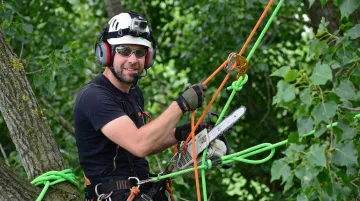
For arborists working in difficult terrain or climbing repeatedly throughout the day, this weight reduction translates directly into:
- Reduced climber fatigue during ascents
- Faster rigging setup and teardown
- Manual equipment transport without machinery
- Less strain on anchor points and rigging systems
Safety Performance: When Things Go Wrong
The most compelling safety advantage isn't about normal operations—it's about what happens during failures.
Steel cable stores significant elastic energy under load. When it breaks, that energy releases as unpredictable "snaking" or "whiplash" that can be fatal to anyone in the vicinity.
The broken cable end moves with enough force to cut through obstacles and cause catastrophic injuries.
HMPE ropes behave fundamentally differently. They store significantly less elastic energy—Dyneema SK78-based lines store up to 10 times less energy than other synthetic options. When HMPE rope fails, it exhibits linear recoil with minimal whipping action.
Additional safety benefits include:
- No sharp burrs - Steel cable develops wire breaks that can slice through gloves and skin; synthetic rope doesn't
- No kinking - Steel cable kinks create weak points and handling hazards; synthetic rope maintains flexibility
- Better grip comfort - Synthetic rope is easier to hold even without gloves (though PPE remains recommended)
UV and Weather Resistance
Early synthetic ropes suffered from UV degradation, which gave them a reputation for shorter lifespans in outdoor applications. Modern arborist-specific products have addressed this comprehensively.
Manufacturers now apply specialized protective coatings:
- Samthane coating (Samson Rope) shields core fibers from UV damage
- Maxijacket HP (Yale Cordage) provides enhanced environmental protection
- Hydrophobic treatments like SamsonDry reduce water uptake by up to 95%, preventing the weight gain and strength loss that occurs when ropes get wet
These treatments extend service life significantly, making synthetic rope viable for year-round outdoor tree care operations.
Floatability in Wet Conditions
For arborists working near water or in wet conditions, synthetic rope offers a practical advantage: it floats. Steel cable sinks immediately, creating retrieval challenges and potential environmental concerns in aquatic settings.
Addressing the Concerns: What About Durability and Abrasion?
The primary hesitation arborists express about synthetic rope centers on one concern: abrasion resistance. Steel cable can drag across rough bark and sharp edges with minimal damage. Synthetic rope cannot.
Understanding the Vulnerability
HMPE fibres are softer than steel. They're vulnerable to:
- Surface abrasion from rough bark and friction points
- Internal abrasion from fibre-on-fibre friction or grit ingress into the braid
- Heat damage from friction, which is particularly dangerous given HMPE's low melting point (~150°C)
Running synthetic rope rapidly over stationary rough surfaces can glaze or melt fibres, causing immediate strength loss.
Modern Solutions to Abrasion
The industry has developed specific solutions:
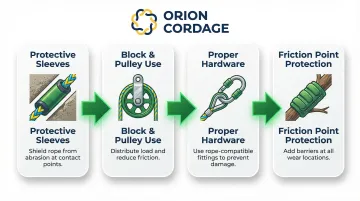
- Protective coatings and sleeves: Abrasion-resistant jackets and removable chafe guards for high-friction rigging points
- Rigging technique adaptations: Avoid "natural crotch" rigging (running rope directly over limbs). Blocks and pulleys reduce friction and heat buildup
- Hardware selection: Proper thimbles and protective sleeves at anchor points prevent accelerated wear
Inspection: More Straightforward Than Steel
While synthetic rope requires more frequent inspection than steel, the process is actually more straightforward.
Steel cable inspection requires identifying broken wires, checking for internal corrosion, and measuring diameter reduction—all of which can be subtle and difficult to assess.
Synthetic rope inspection focuses on visible and tactile indicators:
- Cut or abraded strands
- Melted or glazed fibres
- Discoloration indicating chemical exposure
- Inconsistent diameter or compression
- Pulled strands or deformation
Retirement criteria are clearer:
- Retire rope showing 25% strand volume reduction from abrasion
- Replace immediately if splice stitches are broken (indicates shock loading)
- Remove from service any rope with visible cuts through multiple strands
Cost Considerations
Upfront cost presents a barrier. Synthetic rope costs approximately 2-5 times more than steel cable of comparable strength.
A 5/8-inch UHMWPE rope runs roughly $4.26 USD per foot compared to about $2.00 USD per foot for wire rope.
However, Total Cost of Ownership (TCO) tells a different story:
Cost advantages of synthetic rope:
- No lubrication requirements (steel cable needs regular greasing)
- Immune to corrosion (no rust-related replacement)
- Reduced labor costs from faster rigging
- Lower injury rates from better handling characteristics
- Comparable service life when properly maintained
For operations that value crew safety and efficiency, the higher upfront cost is offset by operational savings and reduced risk.
Steel Cable: When It Still Makes Sense
Despite synthetic rope's advantages, steel hasn't become obsolete. Specific applications still favor steel's unique properties.
Where Steel Remains Superior
High-heat applications - Steel maintains integrity at temperatures exceeding 1000°C, while HMPE melts at ~150°C. For operations involving extreme friction or heat exposure, steel is the only viable option.
Extreme abrasion environments - When rope must drag repeatedly over sharp edges, rough surfaces, or abrasive materials without protection, steel's hardness provides superior durability.
Static installations - For long-term tree cabling or guy lines where weight isn't a concern and exposure to rodents or sharp objects is likely, steel's rigidity and cut resistance offer advantages.
Winch drum applications - Steel's stiffness prevents "diving" (rope burying into lower layers under load), a common problem with softer synthetic ropes on winch drums.
The Hybrid Approach
Many professional arborists now carry both materials and choose based on job requirements.
Common hybrid strategies:
- Use steel for high-friction anchor points or winch drums
- Use synthetic rope for main load lines (lighter weight, easier handling)
- Switch materials mid-rigging based on specific friction/heat zones
This approach maximizes each material's strengths while mitigating their respective weaknesses.
Making the Transition: What Tree Care Professionals Need to Know
Switching from steel to synthetic rope requires more than new equipment. Crews need specific training on handling techniques, inspection protocols, and rigging modifications.
Training Requirements
Crews need specific instruction on:
- Handling differences - Synthetic rope requires different knot selection, with some traditional steel cable knots unsuitable for slippery HMPE fibers
- Inspection protocols - Visual and tactile inspection techniques differ significantly from steel cable assessment
- Service life decisions - Knowing when to remove synthetic rope from service based on manufacturer guidelines
- Rigging technique modifications - Using blocks and pulleys rather than wrapping rope around branches, and protecting friction points that can cause premature wear
Choosing Quality Products
Not all synthetic ropes are created equal. Professional arborists should source from manufacturers with documented testing and quality control processes.
Look for products designed specifically for outdoor professional use, with UV-resistant coatings and breaking strengths verified through independent testing. Orion Cordage manufactures HMPE rope at facilities in the USA and Canada, with products like their Dynaplex 12 Strand offering breaking strengths up to 189,000 lbs. Domestic manufacturing means consistent product specifications and access to technical support when questions arise during implementation.
Transition Strategy
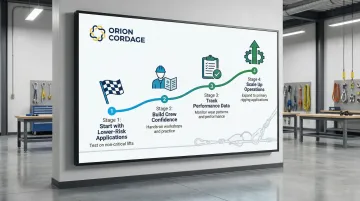
A gradual approach reduces risk:
- Start with lower-risk applications - Use synthetic rope first for lighter rigging jobs where the learning curve has minimal consequences
- Build crew confidence gradually - Give team members hands-on time with inspection, handling, and rigging before tackling complex jobs
- Track what you learn - Document rope service life, inspection findings, and any issues to improve your protocols over time
- Scale up based on experience - Increase synthetic rope use across operations as your crew demonstrates competency
Frequently Asked Questions
Is synthetic rope as strong as steel cable for tree rigging?
Modern HMPE synthetic ropes match or exceed steel cable's breaking strength at a fraction of the weight. The key is selecting the right diameter and construction for your specific application—always verify the manufacturer's rated breaking strength and apply appropriate safety factors.
How long does synthetic rope last compared to steel cable?
With proper care, synthetic rope provides comparable service life to steel cable—typically 5-10 years, or 1-2 years under harsh daily UV exposure. The key difference: synthetic rope requires more frequent inspection but won't corrode internally like steel.
Can I use the same rigging techniques with synthetic rope that I use with steel cable?
Many techniques are similar, but synthetic rope requires adjustments. You'll need different knot selection for slippery HMPE fibers, must avoid natural crotch rigging, and should use blocks/pulleys to manage friction. Protection at contact points is essential to prevent abrasion damage.
What's the biggest safety advantage of synthetic rope for arborists?
The reduced stored energy during failure. When synthetic rope breaks under load, it exhibits minimal recoil compared to steel cable's dangerous "whiplash" effect. Additionally, synthetic rope never develops the sharp wire burrs that can slice through hands and gloves.
How do I inspect synthetic rope for damage?
Run the rope through your hands feeling for inconsistencies in diameter, stiffness, or texture. Look for cut strands, melted fibers, discoloration, or compression. Retire immediately if you find 25% strand volume reduction, broken splice stitches, or cuts through multiple strands.
Is synthetic rope more expensive than steel cable?
Upfront, yes—synthetic rope costs 2-5 times more than steel cable initially. However, Total Cost of Ownership may be lower due to elimination of lubrication requirements, corrosion immunity, reduced labour costs from easier handling, and comparable replacement cycles when properly maintained.