Introduction
Synthetic winch rope has transformed off-road recovery by eliminating the violent recoil risk of steel cable. When steel snaps under tension, it whips back with lethal force—but synthetic rope simply drops to the ground.
Yet many off-road enthusiasts overlook this critical safety component until a recovery goes wrong, often miles from civilization with their Jeep buried axle-deep in mud or wedged between boulders.
Beyond safety, synthetic rope weighs 80% less than steel cable of equivalent strength, making it easier to handle during exhausting recovery situations.
For Jeep owners who regularly venture into remote terrain, selecting the right synthetic rope involves understanding material grades, matching diameter to vehicle weight, and choosing construction methods that resist abrasion and UV exposure.
This guide covers:
- Material types (Dyneema SK75 vs. UHMWPE)
- Proper sizing calculations for Wranglers and Gladiators
- Top product recommendations from proven manufacturers
- Maintenance practices that extend rope lifespan and preserve safety margins
Key Takeaways
- Synthetic rope eliminates steel cable's dangerous recoil while weighing 80% less
- Calculate minimum breaking strength as 1.5x your loaded vehicle weight (most Jeeps need 3/8" to 7/16" diameter)
- UHMWPE fiber (including Dyneema SK75) offers the best strength-to-weight ratio for recovery work
- Overbraided construction protects against abrasion from sand and dirt
- Replace immediately when fraying or UV damage appears—inspect before every trip
Overview of Synthetic Winch Rope in Off-Road Recovery
Synthetic winch rope has replaced steel cable as the preferred choice for serious off-roaders because it addresses the two biggest dangers of vehicle recovery: catastrophic failure and handling injuries. Unlike steel cable that stores kinetic energy like a coiled spring, synthetic rope drops harmlessly when it breaks rather than recoiling at deadly speeds.
Material Types and Performance Characteristics
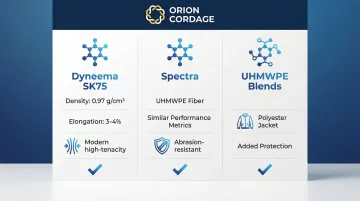
Modern synthetic winch ropes use Ultra-High Molecular Weight Polyethylene (UHMWPE) fibres, marketed under brand names like Dyneema and Spectra. Dyneema SK75 offers a density of 0.97 g/cm³, meaning it floats on water—a practical advantage when crossing streams or recovering from water obstacles.
These fibres are chemically inert and water-repellent, resisting degradation from hydraulic fluids, saltwater, and petroleum products commonly encountered during off-road adventures.
The primary material grades include:
- Dyneema SK75: Multi-purpose grade with high tenacity and low elongation (3-4% at break)
- Spectra: Honeywell's UHMWPE fibre with similar properties and excellent abrasion resistance
- UHMWPE blends: Often combined with polyester jackets for added protection
Construction Methods and Durability
Material choice matters, but construction method determines how well your rope survives abrasive off-road conditions:
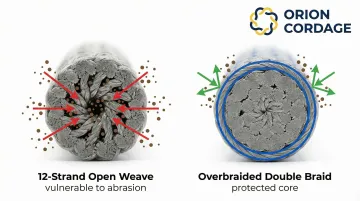
12-Strand Open Weave: Traditional construction where 12 individual strands are braided together without a protective cover. This design offers excellent flexibility for spooling on winch drums.
The tradeoff? Exposed load-bearing fibres catch dirt and sand that act as internal abrasives under tension.
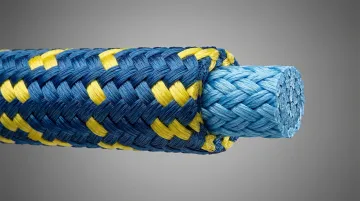
Overbraided (Double Braid): Features a load-bearing core protected by a tightly braided outer jacket.
Master Pull's Superline XD uses this construction to prevent dirt and sand from lodging in the core—a common failure point that cuts fibres from the inside during pulls.
Critical Performance Specifications
Minimum Breaking Strength (MBS): The force at which the rope will fail under ideal laboratory conditions. This should be significantly higher than your winch's rated capacity to provide a safety margin.
Working Load Limit (WLL): The maximum load the rope should carry during normal operations, typically 20% of MBS.
Diameter and Length: Most Jeep applications use 3/8" (9.5mm) or 7/16" (11mm) diameter rope in lengths of 50-100 feet. Longer ropes provide more anchor point options but reduce the winch's pulling capacity due to rope buildup on the drum.
Jeep-Specific Sizing Considerations
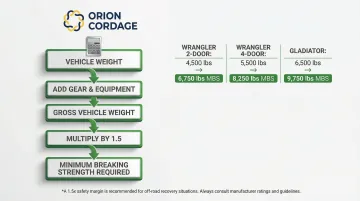
Proper rope selection starts with knowing your loaded vehicle weight:
- Wrangler 2-Door: Curb weight approximately 3,900-4,200 lbs; add 500-800 lbs for typical off-road gear
- Wrangler 4-Door: Curb weight approximately 4,200-4,600 lbs; add 800-1,200 lbs for overlanding equipment
- Gladiator: Curb weight approximately 4,650-5,000+ lbs; add 1,000-1,500 lbs for payload and gear
Industry standard recommends winch capacity of 1.5 times your Gross Vehicle Weight Rating. For a loaded Wrangler Unlimited at 5,500 lbs, you need minimum breaking strength of 8,250 lbs—though most experts recommend 10,000-12,000 lb capacity for a safety margin when dealing with suction in mud or steep incline pulls.
Top Synthetic Winch Ropes for Jeep & Off-Road Recovery
These recommendations prioritize proven performance in off-road conditions, material quality that withstands UV exposure and abrasion, and construction durability for repeated recovery operations.
Each rope has been evaluated for breaking strength, abrasion resistance, and real-world field performance.
Warn Spydura Synthetic Rope
Warn Industries has manufactured winching equipment since 1948, originally producing locking hubs for surplus WWII Jeeps before pioneering the recreational winch market.
Their reputation among professional recovery operators and expedition outfitters reflects decades of field-proven reliability.
Spydura stands out through heat-set pre-stretched Dyneema construction that eliminates the initial stretch and settling that occurs with standard synthetic ropes.
Key protective features include:
- Protective sleeve on first layer guards against drum brake heat (winch brakes exceed 300°F during heavy pulls)
- Full-length rope cover on ProMax versions provides UV and abrasion protection
- Lower bulk compared to some overbraided designs
| Feature | Specification |
|---|---|
| Material & Construction | Pre-stretched Dyneema SK75, 12-strand with protective sleeve |
| Breaking Strength & Sizing | 3/8" (17,600 lbs), 7/16" (21,500 lbs); lengths 50-100 ft |
| Best For | Serious off-roaders and overlanders who prioritize proven reliability and manufacturer support |
Master Pull Superline XD
Master Pull specializes exclusively in high-performance synthetic winch lines, with engineering focused on the unique demands of vehicle recovery.
Their dual-construction approach addresses the primary failure mode of synthetic ropes: internal abrasion from fine particles.
The Superline XD features a pre-stretched, heat-set Dyneema core protected by a tightly braided Dyneema outer cover. This double-braid design prevents dirt and sand from penetrating to the load-bearing core. Desert runners particularly value this construction—sand particles that infiltrate standard open-weave ropes act like microscopic knives, cutting fibers under tension and causing premature failure.
| Feature | Specification |
|---|---|
| Material & Construction | Pre-stretched Dyneema core with overbraided protective cover |
| Breaking Strength & Sizing | 11/32" (16,500 lbs), 3/8" (21,700 lbs); available 50-100 ft |
| Best For | Desert and sand running where abrasion from fine particles is a primary concern |
Yankum Ropes Synthetic Winch Line
Yankum Ropes emerged from the American off-road community with a focus on recovery equipment designed by enthusiasts who actually use it.
Their value proposition centers on domestic manufacturing quality at pricing accessible to weekend warriors rather than just expedition professionals.
The UHMWPE construction with heat-treated fibers provides reliable performance for recreational off-roaders who need dependable recovery capability without premium pricing.
While not featuring the advanced overbraided construction of Master Pull, the 12-strand design offers good flexibility and adequate abrasion resistance for typical trail use.
| Feature | Specification |
|---|---|
| Material & Construction | UHMWPE 12-strand construction with heat-treated fibers |
| Breaking Strength & Sizing | 3/8" (16,000+ lbs), 7/16" (20,000+ lbs); 50-100 ft lengths |
| Best For | Jeep owners seeking American-made quality at mid-range pricing |
Orion Cordage Synthetic Winch Rope
Since 1856, Orion Cordage has manufactured rope and cordage for North America's most demanding applications.
As one of the continent's most established cordage manufacturers, they apply industrial-grade engineering and quality control processes refined over generations to recreational and commercial winch applications.
Their domestic manufacturing advantage includes facilities in the USA and Canada, with many employees contributing 30+ years of rope-making experience. This institutional knowledge translates to consistent quality and the ability to provide custom configurations for specific vehicle weights and use cases.
While they may not have the off-road marketing presence of newer brands, their industrial pedigree and rigorous testing standards appeal to buyers who prioritize long-term durability and proven manufacturing processes.
| Feature | Specification |
|---|---|
| Material & Construction | Premium Dyneema fiber, 12-strand industrial-grade construction |
| Breaking Strength & Sizing | Custom configurations available; standard 3/8" and 7/16" options with industrial-rated breaking strengths |
| Best For | Buyers prioritizing domestic manufacturing, industrial-grade quality, and long-term durability backed by over 150 years of rope-making expertise |
MaxTrax UHMWPE Static Winch Rope
MaxTrax built their reputation on recovery boards before expanding into complementary recovery equipment.
Their winch rope received high praise in Overland Journal testing, described as the "hidden star" that performed flawlessly where other ropes showed weakness.
The pre-stressed construction with wound protective layer represents a unique engineering approach that addresses both UV degradation and abrasion resistance.
With a breaking strength of 20,943 lbs in 3/8" diameter, it provides substantial safety margin for even heavily loaded Gladiators. The design optimizes compatibility with soft shackles while maintaining full functionality with traditional hard shackles.
| Feature | Specification |
|---|---|
| Material & Construction | Pre-stressed UHMWPE with wound protective layer |
| Breaking Strength & Sizing | 3/8" (17,000+ lbs); optimized for soft shackle use but works with hard shackles |
| Best For | Technical off-roaders who want cutting-edge design and proven torture-test performance |
How We Chose the Best Synthetic Winch Ropes
Our evaluation framework prioritizes the factors that matter most when you're executing a recovery in challenging conditions:
- Material Quality and Fiber Type: We focused on Dyneema SK75 and premium UHMWPE fibers that offer the best strength-to-weight ratios and temperature resistance. Lower-grade polyethylene fibers may meet basic specifications but degrade faster under UV exposure and heat stress.
- Construction Method and Abrasion Resistance: Overbraided or jacketed designs significantly outperform open-weave construction in dirty, sandy, or muddy conditions. The outer protective layer prevents abrasive particles from entering the load-bearing core where they cause internal damage.
- Breaking Strength vs. Real-World Performance: Published specifications matter, but independent testing reveals how ropes perform under actual recovery loads, repeated use, and environmental stress. Products with field-proven track records earned preference over newer entries with limited real-world validation.
- Manufacturer Reputation and Warranty Support: Companies with decades of winching equipment experience understand the unique demands of vehicle recovery. Strong warranty support and responsive customer service become critical when you need replacement rope or technical guidance.
Common Selection Mistakes
Many Jeep owners choose rope diameter based on their winch's rated capacity rather than their vehicle's loaded weight. A 12,000 lb winch doesn't require a rope rated for 12,000 lbs if your loaded vehicle weighs 5,500 lbs.
However, the safety margin matters when accounting for suction, steep angles, and shock loading.
Construction quality matters more than initial price. Saving $50-100 upfront often leads to premature replacement.
A $200 overbraided rope that lasts five years costs less than a $120 open-weave rope that needs replacement every two years.
Fairlead compatibility is critical for rope longevity. Synthetic rope requires an aluminum hawse fairlead—steel roller fairleads designed for cable will fray and cut synthetic fibers, especially if they have burrs from previous cable use.
Matching Specifications to Your Use Case
Weekend trail running in rocky terrain demands excellent abrasion resistance but may not require the absolute highest breaking strength. An overbraided construction protects against sharp rock edges that would quickly damage open-weave designs.
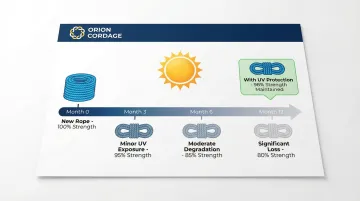
Expedition overlanding through varied terrain benefits from maximum UV protection since the rope remains exposed during extended trips. Full-length protective jackets or coatings prevent the 20% strength loss that can occur in under a year of UV exposure.
Desert and sand running requires the best abrasion protection available. Fine sand particles infiltrate rope construction and act as internal abrasives—double-braid designs that seal out contaminants dramatically extend rope life in these conditions.
Conclusion
Selecting synthetic winch rope is a safety investment requiring the same careful consideration as your winch, recovery points, and other critical equipment. Material quality, construction durability, and proper sizing for your loaded vehicle weight directly impact both safety and long-term value.
Consider total cost of ownership rather than just initial purchase price. A premium rope that lasts five years with proper maintenance costs less per year than budget options requiring frequent replacement.
Maximize rope lifespan and maintain safety margins with proper accessories:
- Aluminum hawse fairlead
- Protective sleeve for the drum end
- Storage bag for protection when not in use
When choosing a supplier, look for manufacturers with proven industrial expertise. Orion Cordage, with over 150 years of rope-making experience, manufactures thousands of SKUs tested at USA and Canada facilities. They offer custom configurations matched to specific vehicle weights and recovery scenarios—the level of engineering precision that matters when you're miles from help.
Contact Orion at 877-224-2673 or sales@orionropeworks.com to discuss rope specifications for your Jeep and recovery needs.
Frequently Asked Questions
What diameter synthetic winch rope do I need for my Jeep?
Multiply your loaded vehicle weight by 1.5, then choose rope with breaking strength exceeding that number. Most 2-door Wranglers use 3/8" diameter (17,000+ lbs), while 4-door Wranglers and Gladiators benefit from 7/16" diameter (20,000+ lbs).
How does synthetic rope compare to steel cable for off-road recovery?
Synthetic rope offers 80% weight reduction, safer failure behaviour (drops instead of recoiling), easier handling, and floats in water. However, it costs more initially, requires UV protection, and needs more frequent inspection than steel cable.
How often should I inspect and replace my synthetic winch rope?
Inspect before each trip and after every recovery for fraying, cut strands, abrasion, heat glazing, or UV damage. Replace immediately if any strand is severed or significant fraying appears. Expect 2-3 years lifespan with regular use, less in abrasive conditions.
Can synthetic winch rope be used in extreme temperatures?
Quality Dyneema SK75 and UHMWPE ropes perform well from -40°F to 158°F, covering virtually all ambient conditions you'll encounter off-road. The bigger concern is friction heat during heavy pulls—prolonged winching under maximum load can generate enough heat to melt fibers. Use intermittent pulling with cooling breaks during extended recoveries.
Do I need a special fairlead for synthetic winch rope?
Yes—aluminum hawse fairleads are required. Steel roller fairleads designed for cable will cut and fray synthetic rope, especially if they have burrs from previous cable use. Choose fairleads with large radius edges to minimize friction and heat buildup during angled pulls. The smoother the contact surface, the longer your rope will last.
How do I properly maintain synthetic winch rope to extend its lifespan?
Rinse with fresh water after mud, sand, or saltwater exposure, then dry completely before storage. Respool under light tension (500-1,000 lbs) after each use, avoid kinking, and store in a protective bag to minimize UV exposure.